Home and desk

Build a cylindrical cup from four dimensions

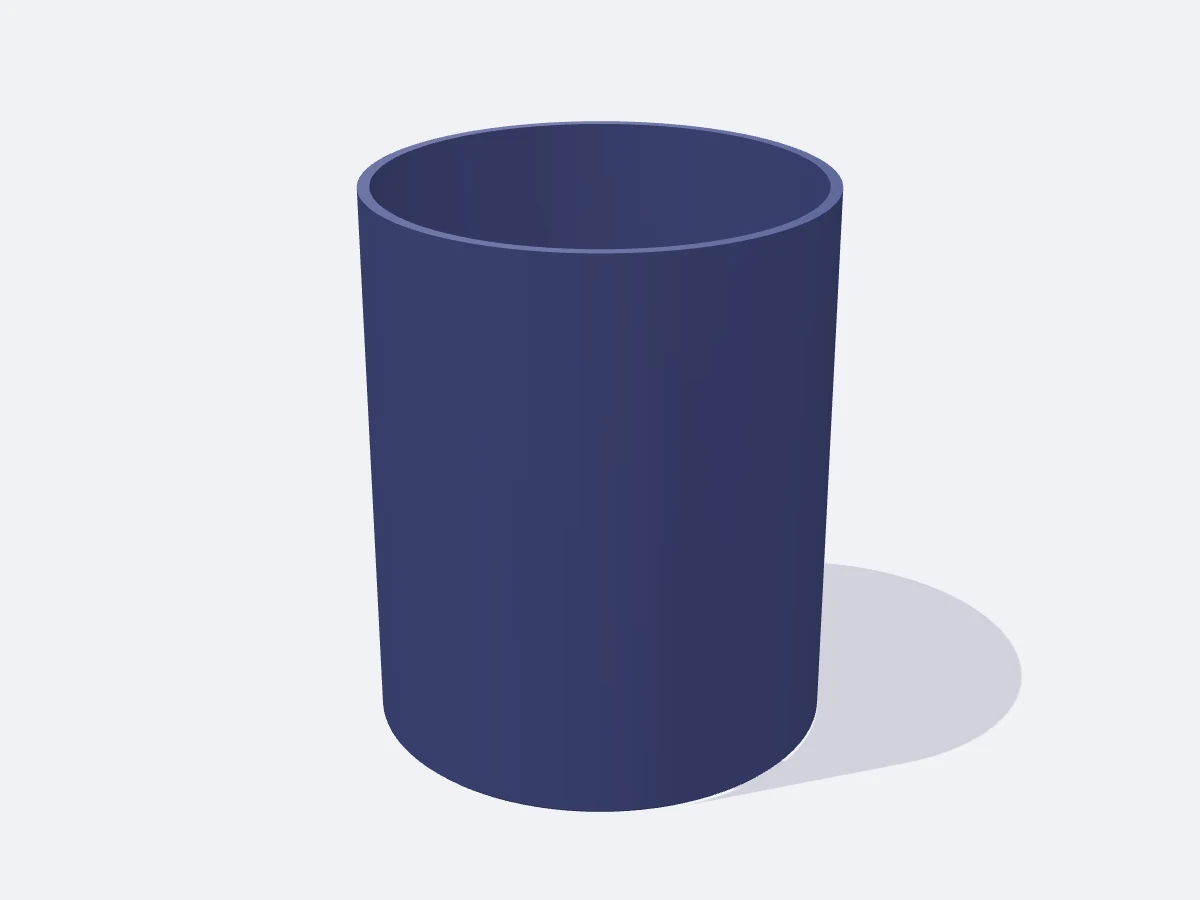
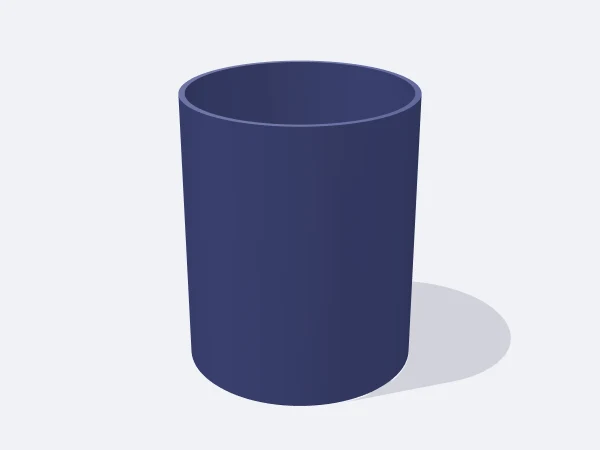
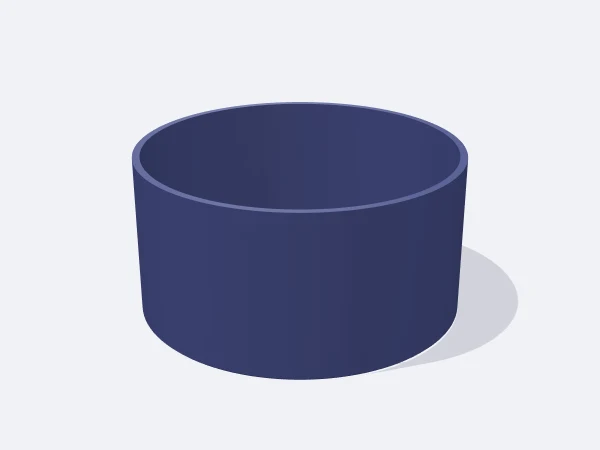
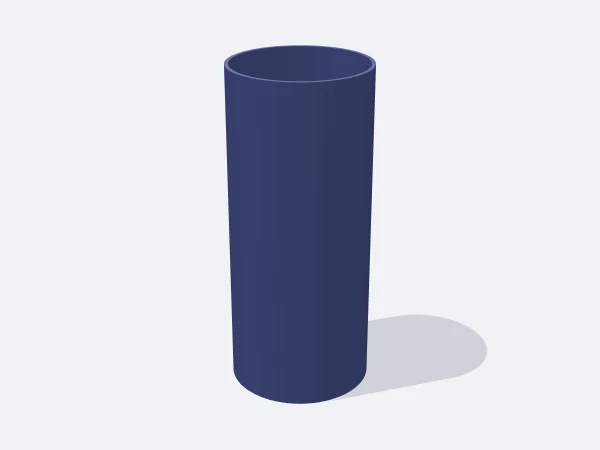
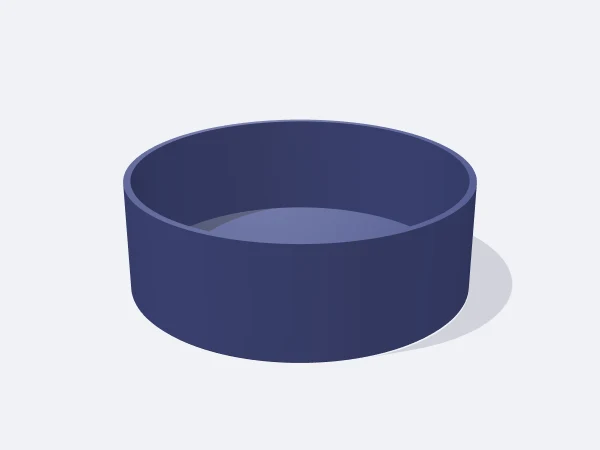
This tool generates a cylindrical cup defined by four numbers and exports it as an STL. Enter the outside diameter, height, wall thickness and floor thickness in millimetres, and the model is computed in your browser ready to download.

The template is deliberately plain: no curves, textures or patterns, just a straight-walled cylinder. That makes it the fastest starting point for a pen cup, brush pot, parts bin or plant saucer, and a useful printer test piece. A small chamfer on the bottom outer edge hides first-layer squish.

Free, no sign-up. Change the sizes in millimetres and download the STL.

Straight-walled cylindrical storage cup

Ready-made variants

Each variant is the same template with different settings. Follow the link and the editor opens with those values.

Adjustable sizes

These values are edited in the editor's template panel. A number outside the range is clamped to the nearest limit automatically.

SizeRangeDefault
Dimensions
Outer diameter20–180 mm78 mm
Height15–200 mm95 mm
Wall thickness0.8–8 mm2 mm
Floor thickness0.8–12 mm2 mm

What it is used for

  • Pens, brushes and rulers on a desk
  • Screws, nuts and small parts storage
  • Wooden spoons and toothpicks in the kitchen
  • Toothbrushes and cotton buds in a bathroom
  • Wall thickness and flow tests when tuning a printer

Printing tips

Orientation
Print floor down with the opening up. Every surface is vertical, so no other orientation is needed.
Layer height
0.2 mm is standard. If you only care about the wall finish, 0.28 mm still looks clean and saves time.
Infill
0% infill with 2-3 perimeters. Infill only lands in the floor, so thickening the floor beats raising infill.
Supports
None needed.
Material
PLA is cheapest and easiest. Choose PETG where hot water or sun is involved. Food contact needs food-grade filament and a food-grade nozzle; an old PLA spool does not qualify.

Tips

  • Make the wall a multiple of your nozzle: 1.6 or 2 mm on a 0.4 mm nozzle leaves no gap.
  • Keep the floor at 2 mm or more; thinner floors crack when the cup is dropped.
  • In vase mode the slicer ignores the wall value, so check the floor setting separately.

Practical ranges for the four dimensions

Diameter runs from 20 to 180 mm and height from 15 to 200 mm. On a desk cup, a diameter between a third and a half of the height stays stable. A 60 mm cup at 140 mm tall is still usable but tips when knocked, so thickening the floor pulls the centre of gravity down.

  • Pen cup: 70-85 mm diameter, 95-110 mm tall
  • Brush pot: 55-65 mm diameter, 130-150 mm tall
  • Parts bin: 100-120 mm diameter, 35-50 mm tall, 2.4 mm wall
  • Plant saucer: 20-25 mm tall with a 3 mm floor
Using a plain cylinder to tune a printer

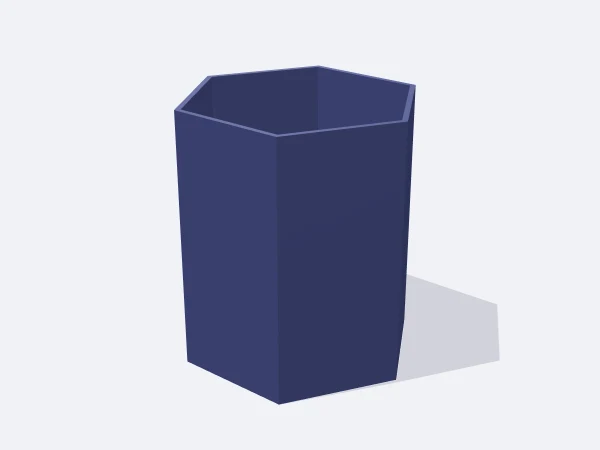
A straight-walled cylinder is the quickest way to check that wall thickness and flow rate agree. If you ask for a 2 mm wall and measure 1.85 mm, flow needs correcting, and you can caliper the rim without cutting the part.

  • Flow check: 2 mm wall, measure at the rim
  • First layer: 90 mm diameter, 15-20 mm tall
  • Cooling and ringing: 50 mm diameter, 150 mm tall

Frequently asked questions

Can I drink from this cup?

Mechanically yes, hygienically it is not advisable. The grooves between layers are hard to clean and most filaments are not food grade. For drinks, a manufactured cup is the better choice.

My cup leaks. What should I change?

Raise perimeters to 3, set the floor to 100% solid and slow the print down. Cups printed as a single wall in vase mode leak almost every time.

Can I add a handle?

This template produces the body only. You can print a handle separately and glue it on; the DrawSTL Handle template can be dimensioned for exactly that.

Why is there a small chamfer at the bottom edge?

The first layer spreads slightly outward as it is pressed into the plate. The 0.5 mm chamfer hides that bulge so the cup sits flat on a level surface.

Similar templates

Set the sizes to fit your part

Open the template in the editor, enter your values and download a print-ready STL. No account needed.

Open in editor