Home and desk

A Gridfinity bin in the size you choose

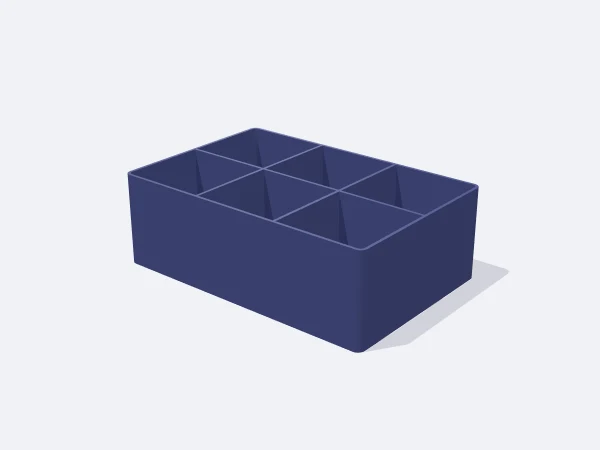
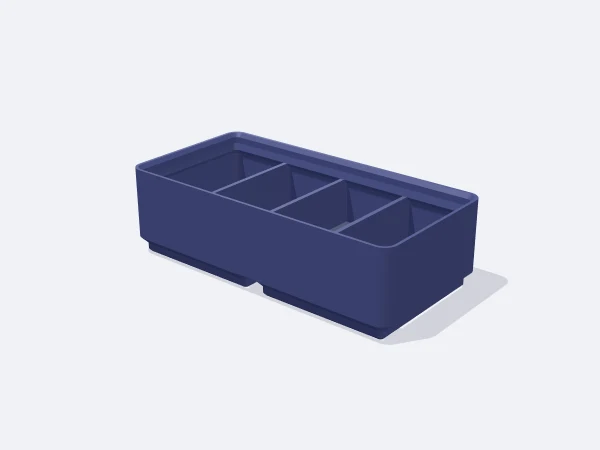
This tool generates a Gridfinity bin from a cell count and a height in units and exports it as an STL. Switch dividers, finger scoop, label shelf and stacking lip on or off; the model is rebuilt in your browser.

Each cell of the base carries the standard Gridfinity profile, so the bin drops into a baseplate or onto the lip of another bin. You can mix bins of different sizes in the same drawer.

Free, no sign-up. Change the sizes in millimetres and download the STL.

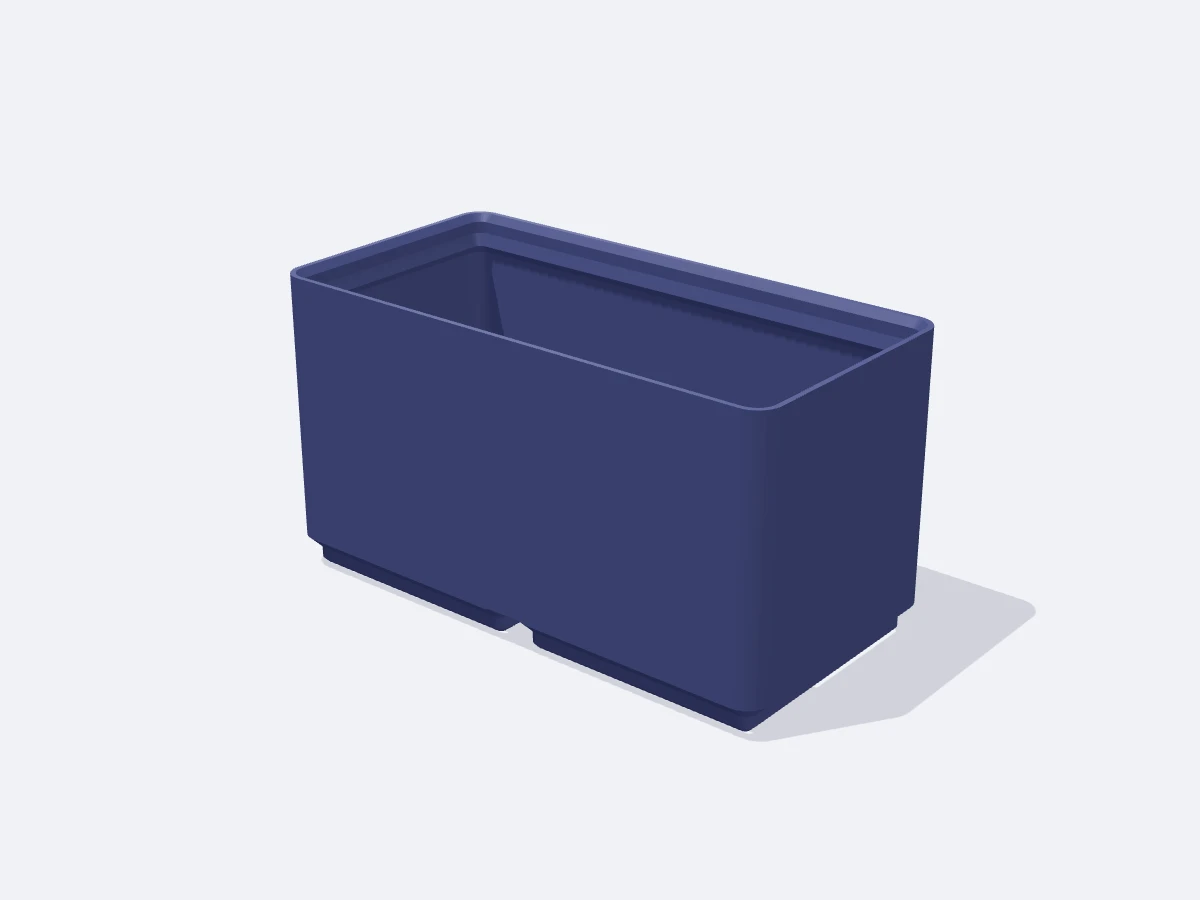
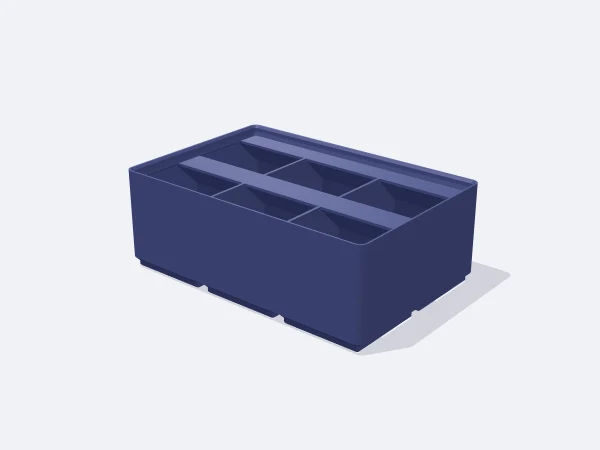
Two cell Gridfinity bin with a centre divider and a label shelf on the back wall

Ready-made variants

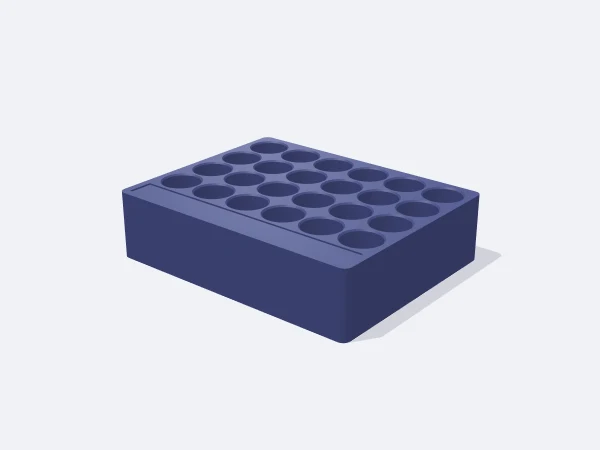
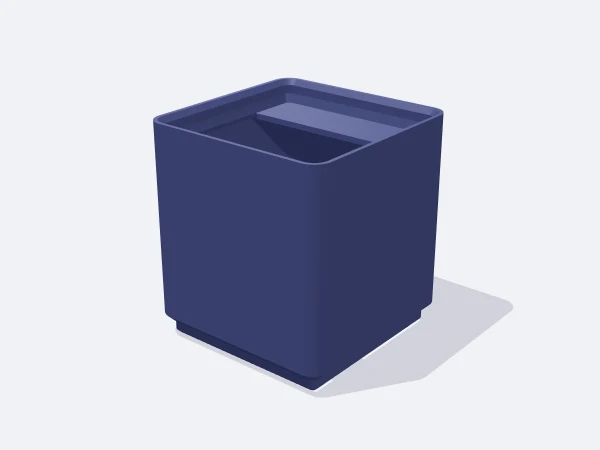
Each variant is the same template with different settings. Follow the link and the editor opens with those values.

Adjustable sizes

These values are edited in the editor's template panel. A number outside the range is clamped to the nearest limit automatically.

SizeRangeDefault
Grid
Cells X1–62
Cells Y1–61
Height (7 mm units)2–156
Dimensions
Wall0.8–3 mm1.2 mm
Dividers
Dividers X1–61
Dividers Y1–61
Options
Finger scoopOn / OffOff
Label shelfOn / OffOff
Stacking lipOn / OffOn
Magnet pocketsOn / OffOff

What it is used for

  • Divided bins for screws, washers and nuts
  • Sorting electronic parts and connectors
  • Low bins for drill bits and bit sets
  • Paper clips, erasers and pens in an office drawer
  • Small compartments for sewing and jewellery supplies

Printing tips

Orientation
Print base down. The label shelf has a 45° underside and the finger scoop faces up, so no supports are needed.
Layer height
Use 0.2 mm. The 7 mm height units are an exact multiple of the layer height, so stacks stay true.
Infill
15% is enough. The base is solid up to 7 mm; use 3 perimeters for heavy screw bins.
Supports
None. Short 3 mm bridges form where cell corners meet, and magnet pocket roofs print as bridges.
Material
PLA is fine inside a drawer. PETG holds up better in an oily workshop.

Tips

  • Keep the wall at 1.2 mm; that is three lines with a 0.4 mm nozzle.
  • Choose a divider count that is a multiple of the cells so walls line up with the grid.
  • A 6x6 bin is 251.5 mm; at most 5 cells fit on a 220 mm bed.

How the size is worked out

The outer size is the cell count times 42 mm minus 0.5 mm, so a 1x1 bin is 41.5 mm. Height is given in 7 mm units and includes the base: 6 units means 42 mm. The stacking lip adds 3.6 mm on top. From the bottom, the base profile is a 0.8 mm chamfer, 1.8 mm straight and a 2.15 mm chamfer. All values come from the MIT licensed Gridfinity Rebuilt project.

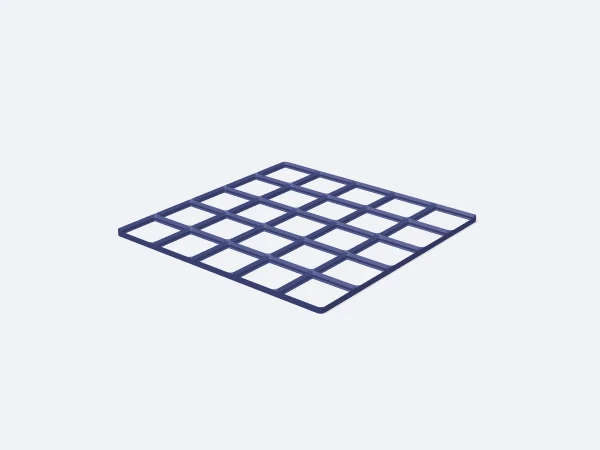
  • 0.25 mm clearance on every side between bin and plate pocket
  • 1.2 mm divider walls, inner floor at 7 mm
  • Ø6.5 x 2.4 mm pockets for 6x2 mm magnets
Stacking lip and label shelf

With the lip on, the bin above sits in the mouth of the one below. The label shelf and dividers stop 1.2 mm below the lip so they never touch the bin above. The sharp crest of the standard lip is flattened to 0.8 mm here, which prints cleaner and fits the same.

Frequently asked questions

Will it fit another Gridfinity baseplate?

Yes. The base profile matches the standard, so it fits Gridfinity Rebuilt plates and plates from other makers.

Can I make half cell bins?

This template makes whole cells. If you need half a cell, a divider inside the bin is the sturdier choice.

Do I need magnets?

No. The bin sits in the pocket by its own weight and does not slide. Magnets help when a drawer slams or the plate is tilted.

Similar templates

Set the sizes to fit your part

Open the template in the editor, enter your values and download a print-ready STL. No account needed.

Open in editor