Home and desk

Create a pen holder sized for your desk

This tool generates a pen holder at the diameter and height you type in and exports it as an STL. Choose the body shape, set wall and floor thickness, add compartments if you want them, and the model updates in the browser so you can spin it and check.

A pen cup is one of the first things most people print, because it is quick and nothing has to fit anything else. With twist, angled rim and side pattern options, the same template produces either a plain office cup or a decorative desk object.

Free, no sign-up. Change the sizes in millimetres and download the STL.

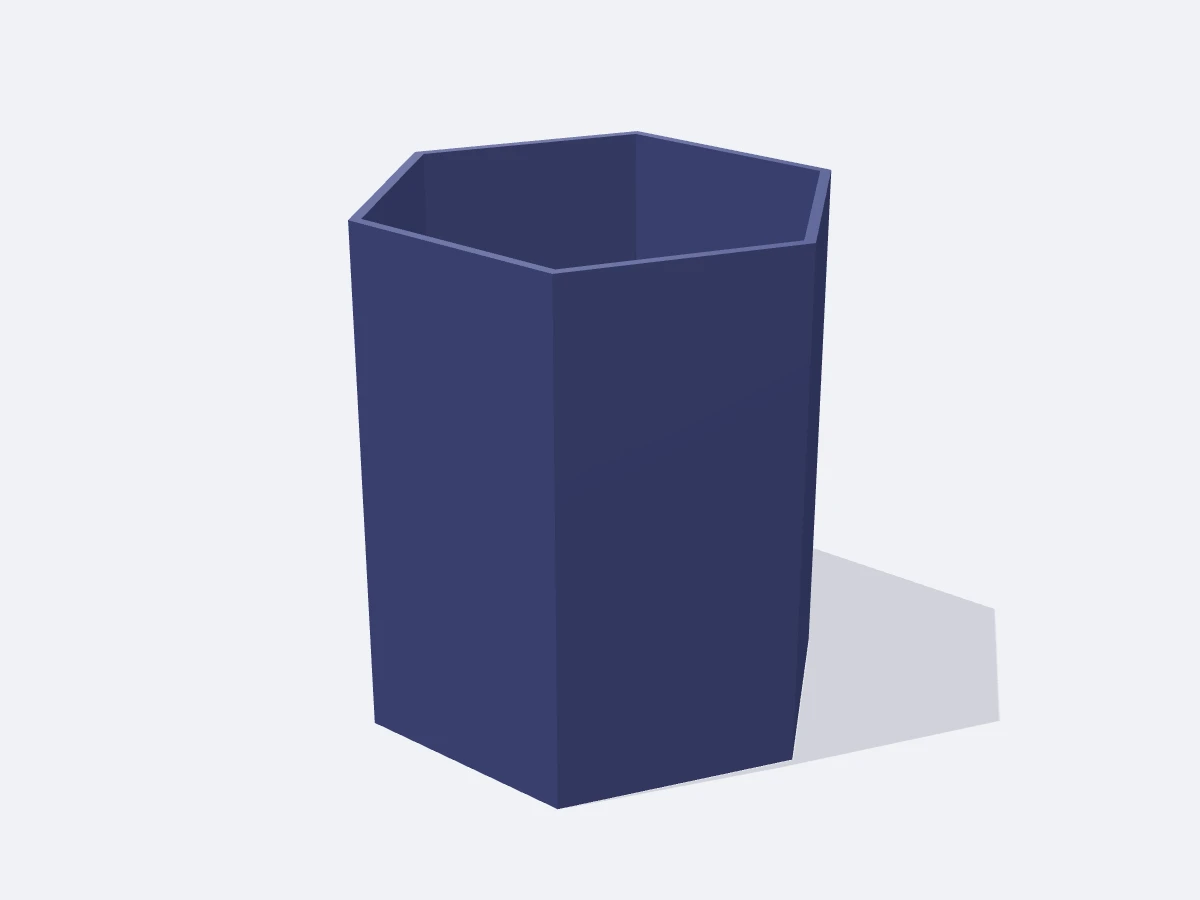
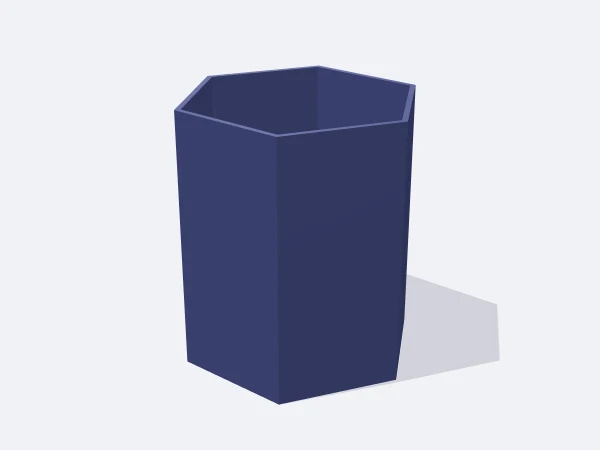
Hexagonal pen holder with pointed vertical slots on its sides

Ready-made variants

Each variant is the same template with different settings. Follow the link and the editor opens with those values.

Adjustable sizes

These values are edited in the editor's template panel. A number outside the range is clamped to the nearest limit automatically.

SizeRangeDefault
Shape
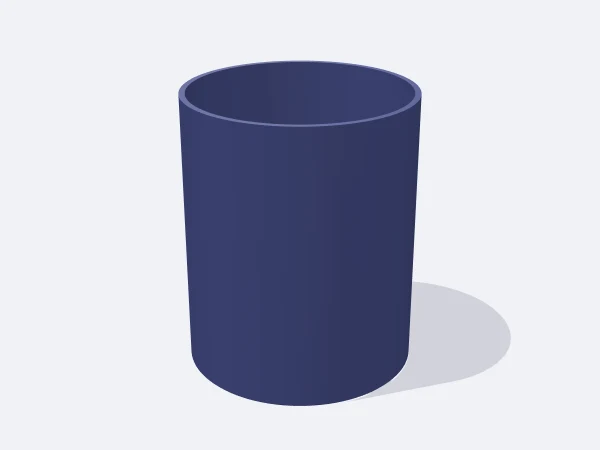
ShapeCircle, Square, HexagonHexagon
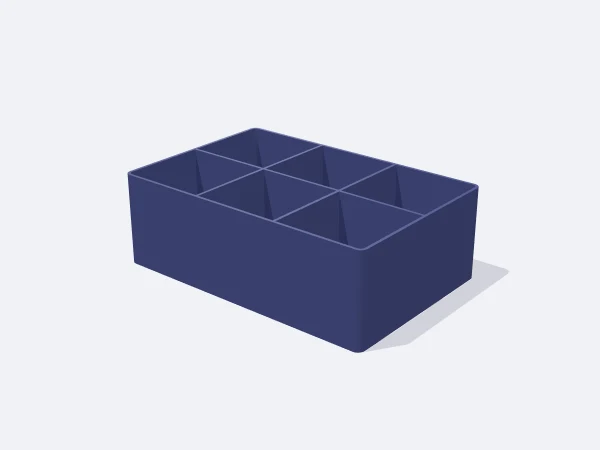
CompartmentsOne, 2, 3, 4One
Side patternNone, Slots, Honeycomb, HolesNone
Dimensions
Diameter / width40–150 mm80 mm
Height40–200 mm100 mm
Wall0.8–6 mm2 mm
Bottom0.8–10 mm2 mm
Style
Twist0–90 °0 °
Rim angle0–30 °0 °
Opening size *2–20 mm6 mm
Rib thickness *0.8–10 mm3 mm

Sizes marked with a star appear in the panel only when the related shape, style or option is active.

What it is used for

  • Pens, pencils and scissors on a desk
  • Paint and makeup brush organiser
  • Wooden spoons and spatulas in the kitchen
  • Screwdrivers and pliers on a workbench
  • A fast gift print or a printer tuning test

Printing tips

Orientation
Print floor down with the opening facing up. Side openings use teardrop and pointed shapes, so the walls print without supports.
Layer height
0.2 mm. On a twisted body the layer lines create the pattern, so 0.24 mm is both faster and visually stronger.
Infill
No infill needed: 0% with 2-3 perimeters is enough, since the body is hollow and infill only lands in the floor.
Supports
None needed. The angled rim and divider walls are all vertical surfaces.
Material
PLA is enough and cheapest. Use PETG on a sunny windowsill or in a car, because PLA softens around 55 °C.

Tips

  • Make the wall a multiple of your nozzle: 1.6 or 2 mm on a 0.4 mm nozzle prints as whole lines with no gap.
  • Keep the floor at 2 mm or thicker; it is the first thing to crack when the cup gets knocked over.
  • If you pick a side pattern, leave twist at 0, because the pattern is skipped on a twisted body.

Twist, compartments and angled rim

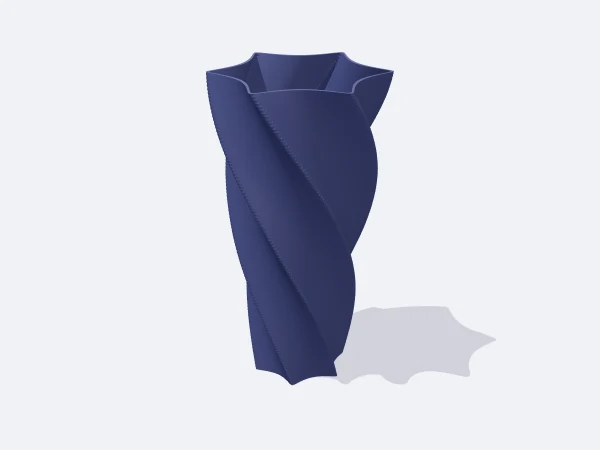
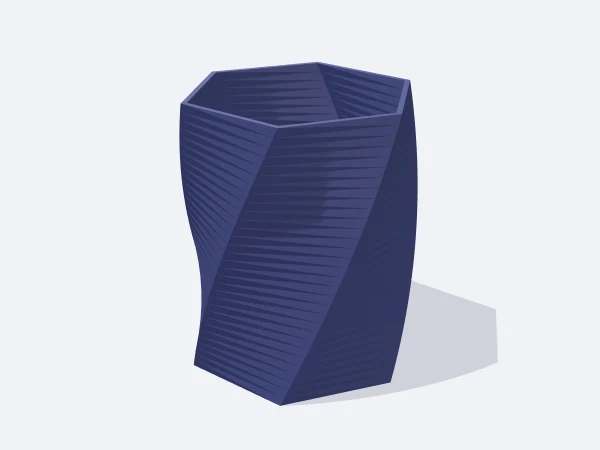
Twist rotates the body as it rises, which gives a spiral effect on faceted cross-sections. It makes no visible difference on a round body, so pair it with the square or hex shape. The panel automatically limits twist when the side slope would pass 45° and tells you the new value, so the part stays printable without supports.

  • Square and hex bodies: twist of 30-60° reads best
  • Round body: skip twist, a side pattern does more
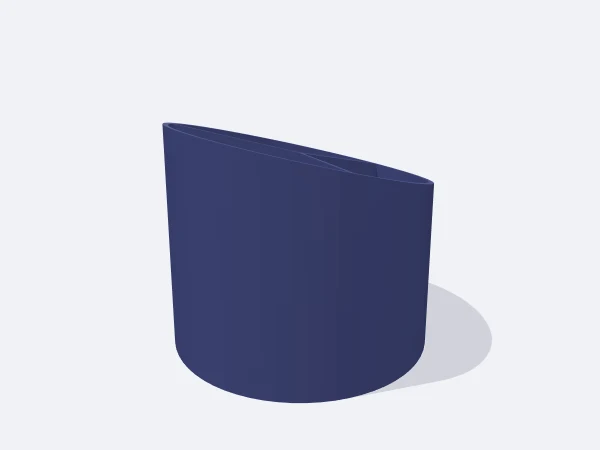
  • Angled rim: 20° suits most pen lengths
Choosing a side pattern

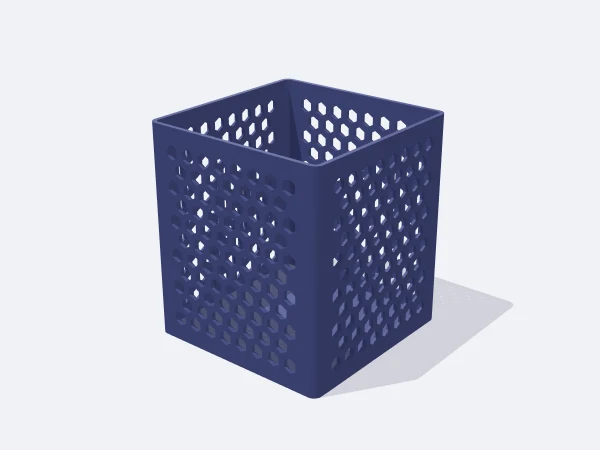
The slot pattern cuts fine vertical openings and uses the least material; the pointed tops close without support. Honeycomb gives a face that is both stiff and decorative, while round holes produce a softer look.

  • Slots: lightest, pen bodies visible from the side
  • Honeycomb: stiffest face, lets you keep a 2 mm wall
  • Holes: softer look, dust falls out easily

Frequently asked questions

What diameter should a pen holder be?

For a single-compartment office cup, 70-85 mm diameter and 95-110 mm height work comfortably. For brushes, 60 mm diameter and 140 mm height is more useful.

How long does it take to print?

At 0% infill, 2 perimeters and 0.2 mm layers, an 80 by 100 mm cup takes 2-3 hours on most printers. Printing it in vase mode with a single wall roughly halves that.

Will dust fall out of a patterned holder?

The openings go right through the wall, so fine dust can escape. That is harmless on a desk, but if you expect pencil shavings, turn the pattern off and use a plain body.

Why is the pattern skipped on a twisted body?

Twist tilts the side surface, which would tilt the openings too and leave their bridges unprintable. That is why the side pattern is dropped whenever twist is above zero.

Similar templates

Set the sizes to fit your part

Open the template in the editor, enter your values and download a print-ready STL. No account needed.

Open in editor