Vent & plumbing

Make a drain strainer that fits your own drain

This page generates a strainer for your own shower or sink drain and exports it as an STL. Choose a cap shape and body type, enter the pipe bore in millimetres, pick a hole pattern, and the model is recalculated in the browser.

Replacement chrome strainers vary by manufacturer, which is why the shop rarely has the one that fits. Here you set the cap diameter, skirt depth and rim band yourself, so the part covers the opening fully and keeps hair and grit out of the trap.

Free, no sign-up. Change the sizes in millimetres and download the STL.

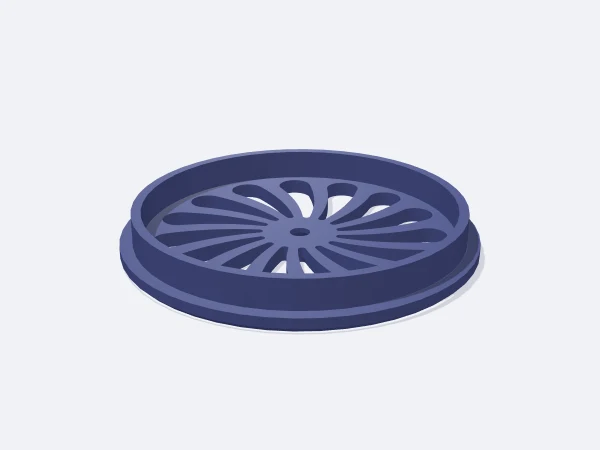
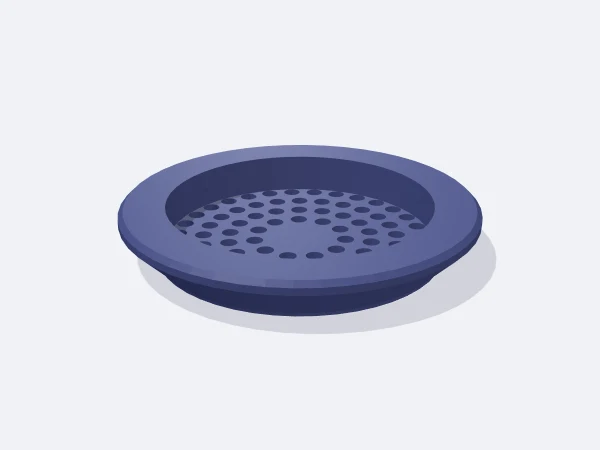
Round drain strainer with curved venturi slots that widen outward around a solid centre hub

Ready-made variants

Each variant is the same template with different settings. Follow the link and the editor opens with those values.

Adjustable sizes

These values are edited in the editor's template panel. A number outside the range is clamped to the nearest limit automatically.

SizeRangeDefault
Shape
Cap shapeCircle, SquareCircle
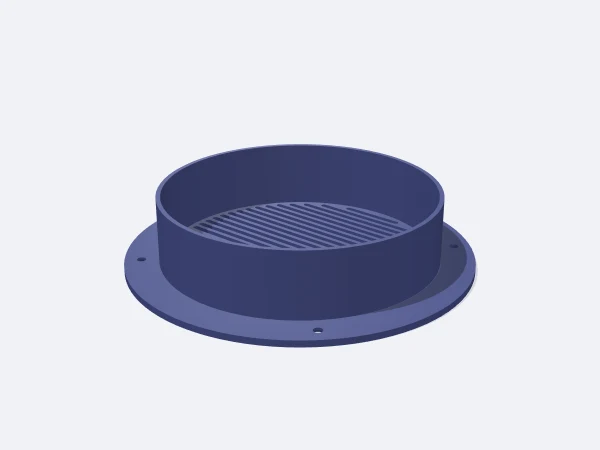
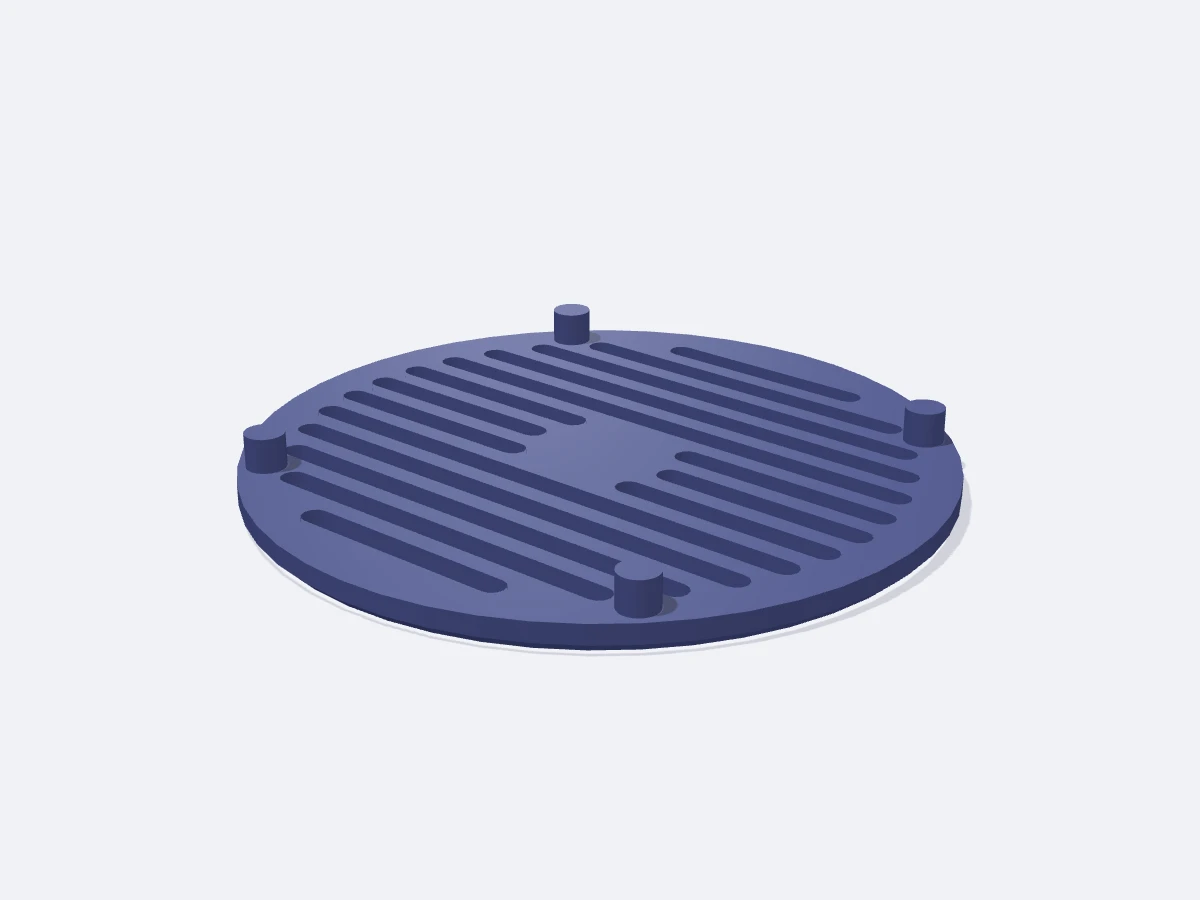
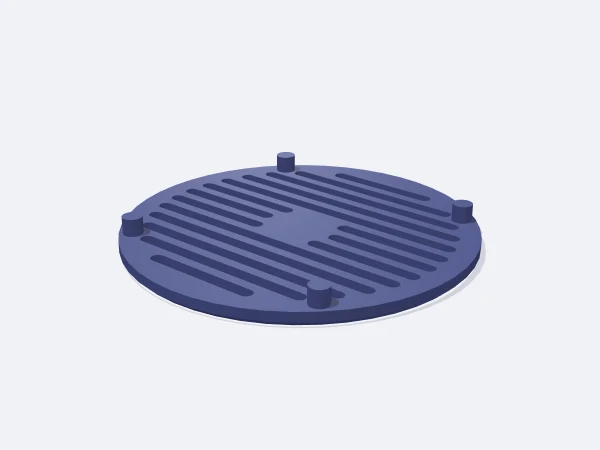
Body typeFooted, Skirted, BasketFooted
PatternSpiral, Radial, Venturi, Round holes, Honeycomb, Square grid, Parallel lines, Bar gridParallel lines
Under flange *45° cone, Flat45° cone
Dimensions
Cap size30–200 mm70 mm
Plate thickness1.2–8 mm3 mm
Rim band *1–15 mm4 mm
Corner radius *0–30 mm4 mm
Pattern
Slot / hole size1–10 mm2.6 mm
Rib thickness0.8–10 mm2 mm
Slot count *4–4018
Twist angle *0–80 °30 °
Outward flare *0–30.9
Bar angle *0–90 °0 °
Hub Ø4–60 mm13 mm
Side pattern
Side pattern *None, Round, Honeycomb, Square, Vertical slots, Spiral (slanted slots)None
Side opening *2–20 mm5 mm
Side rib *0.8–10 mm1.6 mm
Solid top/bottom band *1–30 mm2 mm
Slant (from vertical) *0–45 °30 °
Body
Skirt / basket Ø *20–190 mm60 mm
Skirt / basket height *2–60 mm8 mm
Wall thickness *0.8–8 mm2 mm
Feet *0–84
Foot Ø *1.5–10 mm4 mm
Foot height *0.5–40 mm3.5 mm
Foot circle (%) *25–9592
Options
Center screwOn / OffOff
Screw hole Ø *1–12 mm4 mm
Countersink Ø *2–24 mm8 mm
Countersink depth *0–8 mm1.6 mm
Rim chamferOn / OffOn

Sizes marked with a star appear in the panel only when the related shape, style or option is active.

What it is used for

  • Hair catcher in a shower tray or floor gully
  • Food waste strainer in a kitchen sink
  • Replacement for a cracked chrome basin strainer
  • Guard over a washing machine discharge channel
  • Leaf and soil catcher in a balcony or terrace drain

Printing tips

Orientation
Footed and skirted bodies print cap-face down. The basket prints on its perforated floor with a 45° cone modelled under the flange.
Layer height
Use 0.16 mm. Hole edges and thin ribs come out noticeably cleaner at that height.
Infill
25-30% infill with 3 perimeters, since people stand on the cap plate.
Supports
None needed. All three body types are built to come off the plate support free.
Material
Choose PETG. Shower water reaches 40-45 °C, where PLA slowly deforms, and PETG does not take up water. For direct food contact, stainless steel is still the better answer.

Tips

  • Make the cap 4-6 mm larger than the drain opening so the rim band sits on the porcelain.
  • Measure the bore while wet; limescale can narrow it by up to 1 mm.
  • Keep slots at 2-3 mm. Above 3 mm hair passes through, below 1.5 mm it clogs quickly.

Measuring the pipe bore correctly

Skirted and basket bodies create a neck that enters the pipe, and the number you need is the internal diameter of the drain opening, not the outside. Put the caliper jaws inside and measure twice at right angles, because old drains are rarely truly round.

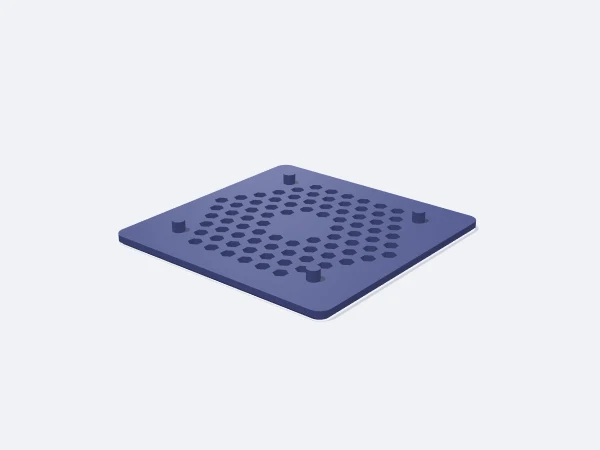
  • Footed body: the most forgiving choice for odd or slippery openings
  • Skirted body: friction fits the mouth and traps hair along the skirt
  • Basket body: hangs into the pipe, adds volume, easy to empty
Pattern, hub and clogging

The hub is the solid disc left in the middle of the cap. It pushes the openings away from the centre so water flows both centrally and around the edge, and one hair clump cannot block everything. Around 13 mm works for most sizes.

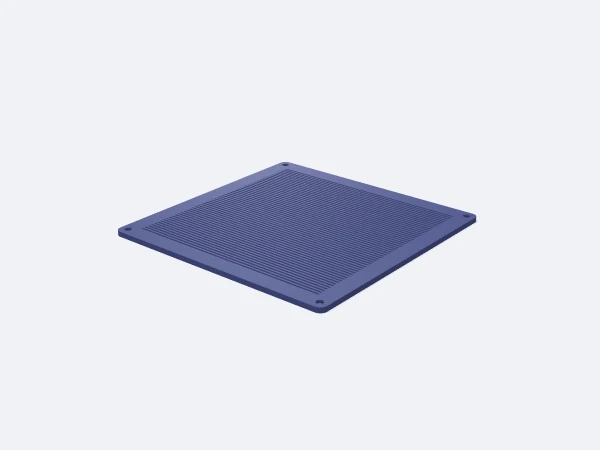
  • Hair: parallel lines or venturi, 2-2.6 mm slots
  • Food waste: round holes, 3-3.4 mm
  • Leaves and coarse debris: honeycomb, 4 mm
  • Keep the rim chamfer on so the strainer is not a trip edge

Frequently asked questions

Should the strainer be a tight fit?

It only needs the rim band flat on the porcelain so water cannot bypass it; the skirt holds by friction. A very tight fit is hard to lift out when wet, so 0.3-0.5 mm clearance is more practical.

Is a 3D printed strainer hygienic?

The fine grooves between layers can hold biofilm. Lifting it out and brushing it weekly keeps that under control, but for constant kitchen food contact stainless steel is a better fit.

Can I make one for a square drain?

Yes. Set the cap shape to square and give it a corner radius. The square cap works with all three body types, not just the footed one.

Mine clogs too quickly. What should I change?

Increase the opening size by 0.4 mm or switch the pattern to round holes. A larger hub also helps, because it spreads the flow toward the cap edge.

Similar templates

Set the sizes to fit your part

Open the template in the editor, enter your values and download a print-ready STL. No account needed.

Open in editor