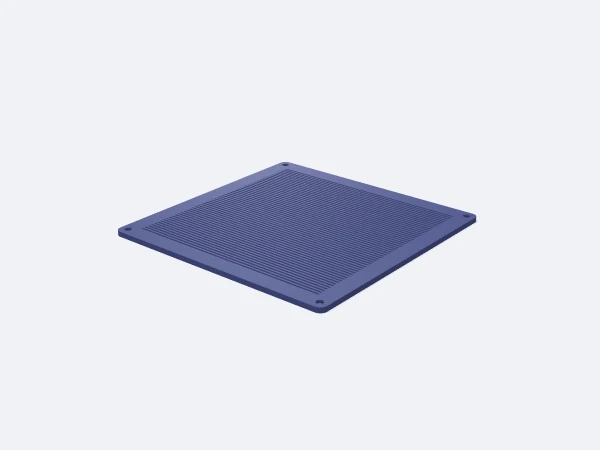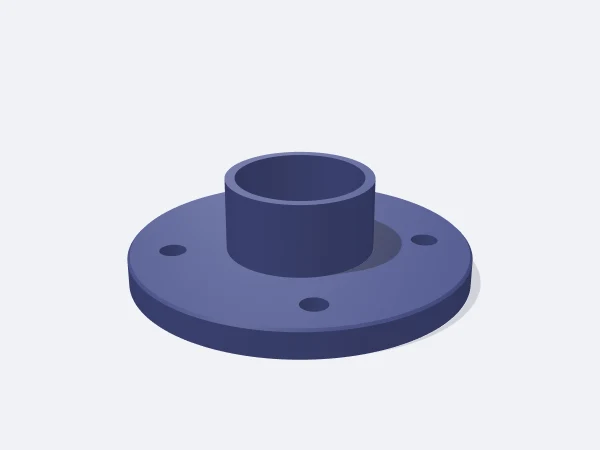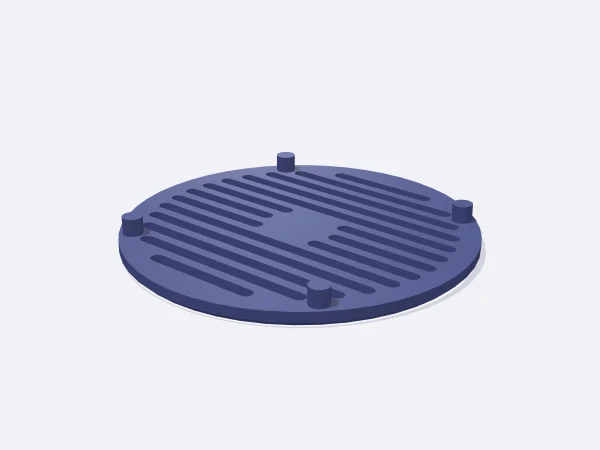
Vent & plumbing

Build a duct vent to your own duct size

This tool makes the flanged vent that fits the end of a ventilation duct, sized by you and exported as an STL. Enter the duct shape and internal size, pick the inner style, set the fit tolerance, and the part is computed in the browser.

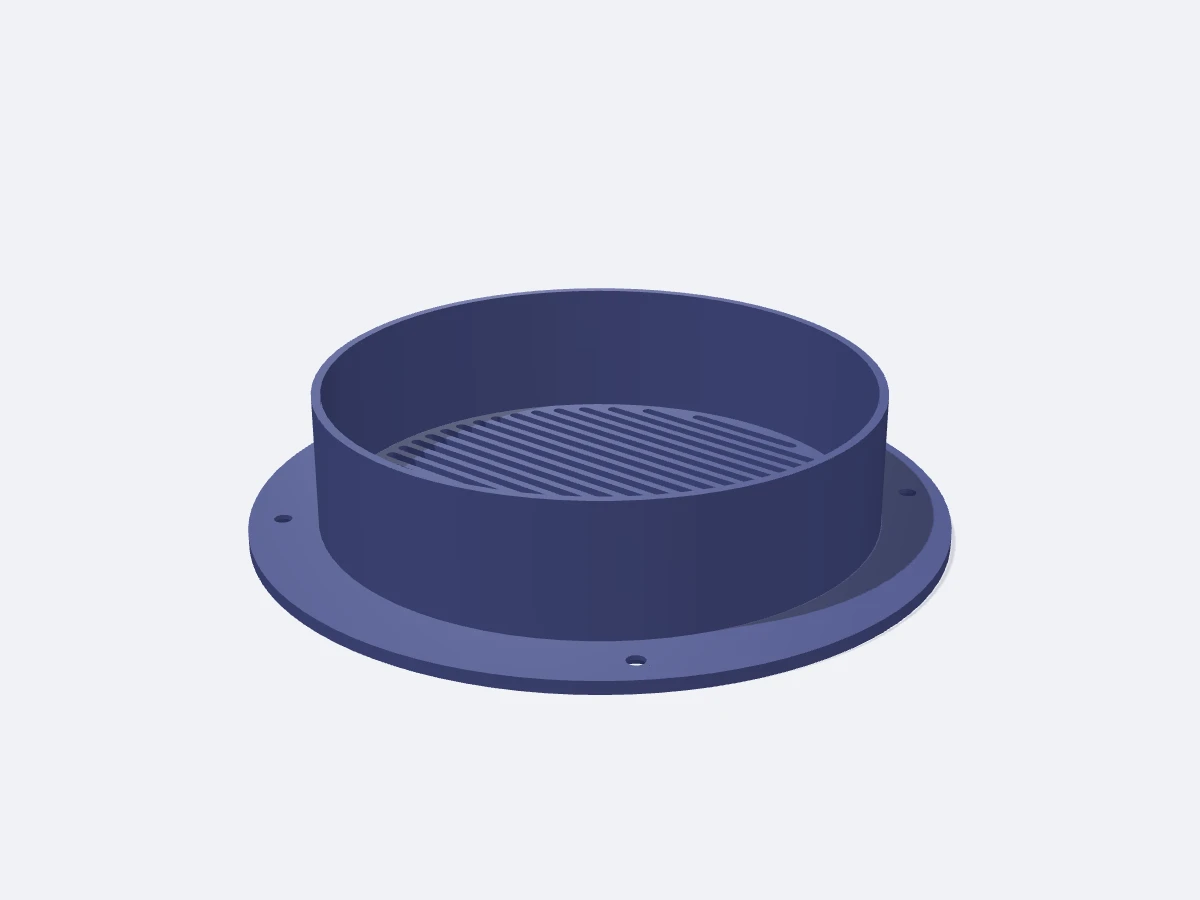
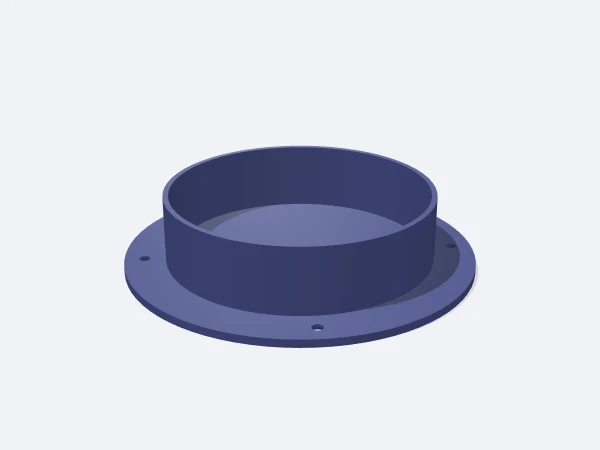
Every vent has two parts: a flange that sits against the wall and a collar that slides inside the duct. Collar depth, flange width and tolerance are separate inputs, so the same template covers everything from 80 mm rigid pipe to 315 mm flexible duct.

Free, no sign-up. Change the sizes in millimetres and download the STL.

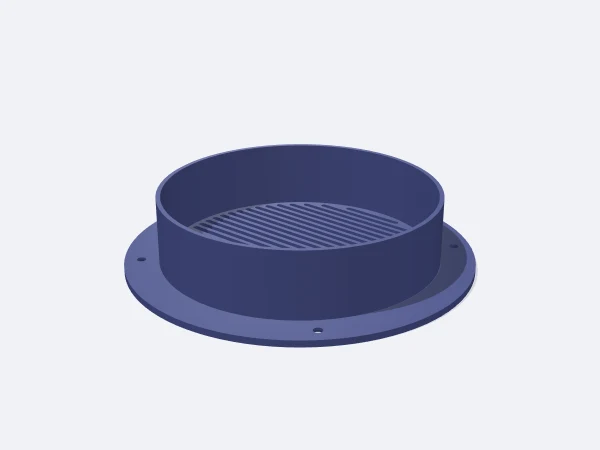
Round duct vent with a wide flange, parallel slots in the face and a collar that fits the duct

Ready-made variants

Each variant is the same template with different settings. Follow the link and the editor opens with those values.

Adjustable sizes

These values are edited in the editor's template panel. A number outside the range is clamped to the nearest limit automatically.

SizeRangeDefault
Shape
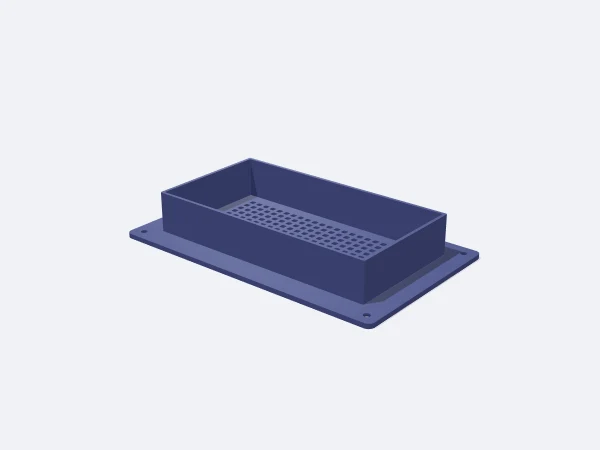
Duct shapeRound, RectangularRound
InsertGrille, Louver, Diffuser, Open, ClosedGrille
Dimensions
Duct inner Ø *80–315 mm125 mm
Duct width *60–500 mm150 mm
Duct height *40–300 mm80 mm
Flange width5–50 mm15 mm
Sleeve depth5–100 mm30 mm
Tolerance0–3 mm0.5 mm
Sleeve slits *0–80
Pattern
Pattern *Spiral, Radial, Venturi, Round holes, Honeycomb, Square grid, Parallel linesParallel lines
Opening size *1–20 mm2.6 mm
Rib thickness *0.8–10 mm2 mm
Slot count *4–4018
Twist angle *0–80 °30 °
Outward flare *0–30.9
Hub Ø *0–60 mm0 mm
Blades
Blades / rings *2–205
Blade angle *0–45 °30 °
Blade thickness *0.8–5 mm1.6 mm
Mounting
Screw holesOn / OffOn

Sizes marked with a star appear in the panel only when the related shape, style or option is active.

What it is used for

  • Wall outlet for a bathroom or kitchen extractor duct
  • Room supply and extract terminals on an MVHR system
  • Wall vent for a tumble dryer hose
  • Dust extraction ports in a workshop or printer enclosure
  • Blind cap to close an unused duct stub

Printing tips

Orientation
Print face down with the collar pointing up. Blades are capped at 45° and the back of the flange stays a flat plane.
Layer height
0.2 mm with a 0.4 mm nozzle suits most sizes. Above 200 mm, 0.28 mm roughly halves the time.
Infill
20% infill, 3 perimeters. The collar is a thin shell already, so infill mostly lands in the flange.
Supports
None required. Louver and diffuser blade angles are limited to 45°.
Material
PETG is the safer choice: duct outlets see sun and warm kitchen air, and PLA sags under both. ASA lasts longer on an exterior wall.

Tips

  • A 0.5 mm tolerance gives a friction fit; raise it to 1 mm if you plan to seal with silicone.
  • Caliper the real duct bore rather than trusting the printed label; a 125 mm spiral pipe often measures 124 mm.
  • Set 2-4 collar slits to let the collar flex into a tight duct without forcing.
  • For a blind cap, raise infill to 30% so the face does not dish under pressure.

What the inner styles do

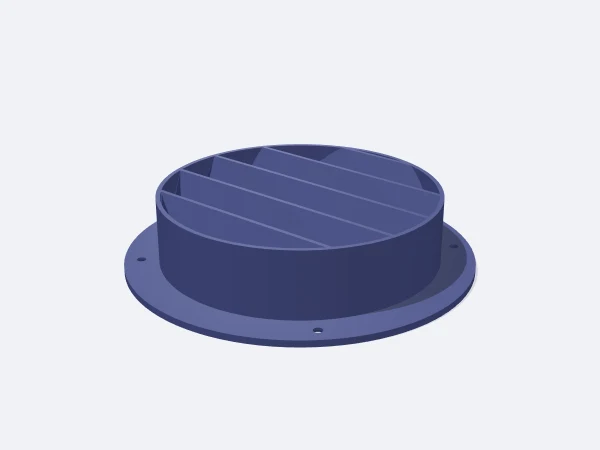
The grille closes the face with one of seven patterns and gives the highest airflow; a hub value leaves a solid disc in the middle. The louver turns the air downward with horizontal blades and hides the duct bore when you look up at it.

  • Grille: maximum flow, least pressure drop
  • Louver: exterior outlets, rain and line-of-sight shielding
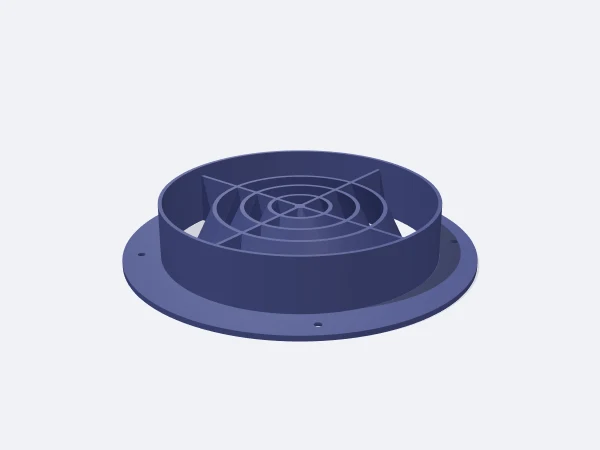
  • Diffuser: ceiling terminals that need wide spread
  • Open: a plain ring for your own insert
  • Closed: capping an unused opening

Collar depth and fit tolerance

Collar depth is how far the vent reaches into the duct. For rigid spiral pipe 25-30 mm is enough friction; for flexible aluminium duct go to 40-50 mm so a clamp has something to grip.

  • Rigid PVC and spiral pipe: 0.3-0.5 mm tolerance
  • Flexible aluminium duct: 0.8-1.2 mm, clamped
  • Rough wall openings: flange width above 20 mm

Frequently asked questions

Which duct measurement should I enter?

Caliper the internal diameter of the pipe and enter that. The tolerance is subtracted from the collar for you, so there is no need to allow extra clearance yourself.

The vent is bigger than my build plate. Now what?

Round ducts go up to 315 mm, but anything over 250 mm rarely fits. Place the model diagonally, or split it in two with the Split tool and screw the flange halves together from behind.

Will louver blades keep rain out?

A 30-45° blade angle stops rain falling straight in, but driving rain also needs the duct itself to slope outward. Keep blade thickness at 2 mm or more outdoors.

Can it handle kitchen extractor heat?

Hood exhaust is usually 40-60 °C. PETG is comfortable there, while PLA may slowly sag in that range.

Similar templates

Set the sizes to fit your part

Open the template in the editor, enter your values and download a print-ready STL. No account needed.

Open in editor