Home and desk

Pipe flange: slide the pipe onto the neck, bolt through the circle

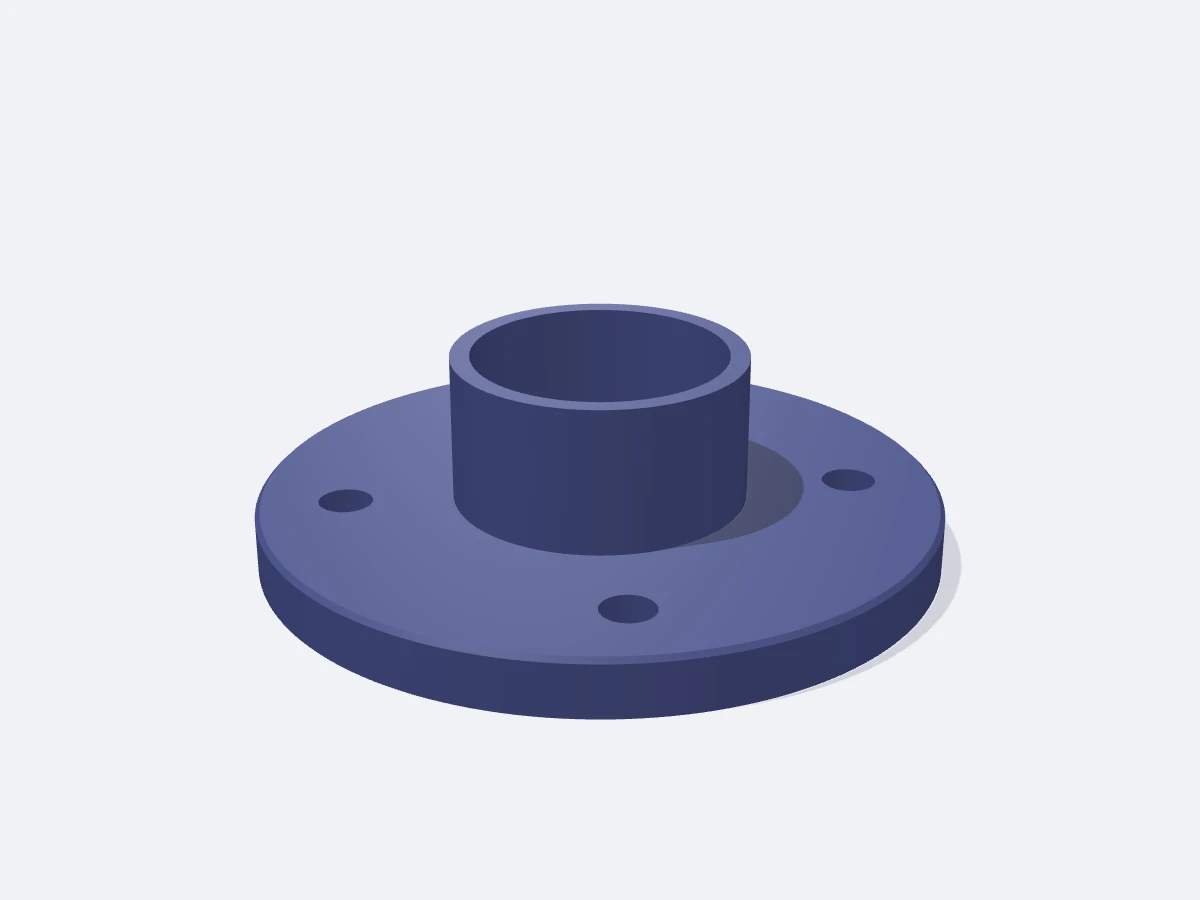
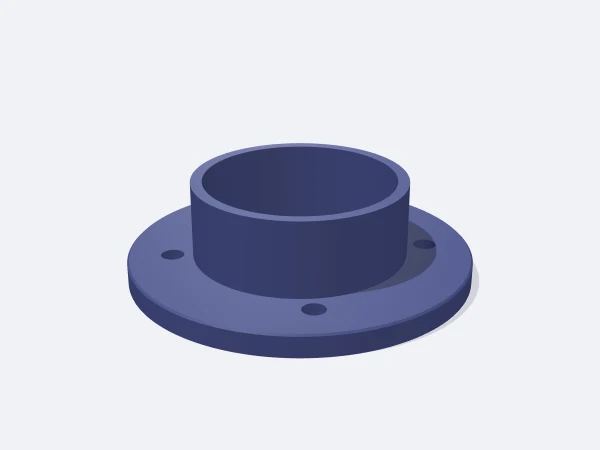
This page opens the DrawSTL pipe flange template: a parametric round plate with a neck that mates to a pipe end and bolts to a surface or another flange, sized in millimetres and downloaded as a print-ready STL. You set the flange diameter and thickness, the neck diameter and length, and the bore that runs through.

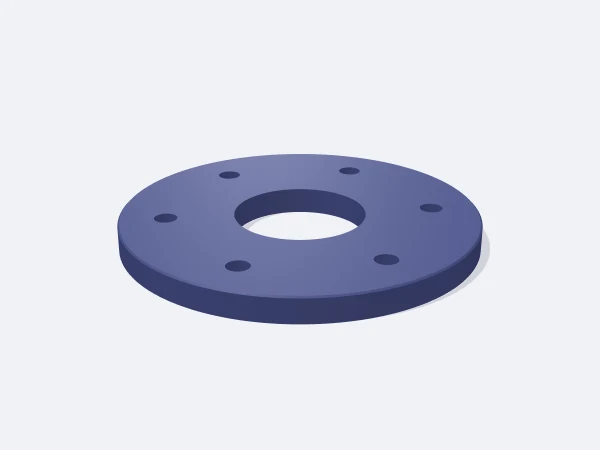
Bolt holes sit on a circle around the centre at equal angles, and you set that circle's radius as a percentage of the flange radius. Set the neck length to zero and no neck is built, leaving a flat bolted plate with a hole in the middle.

Free, no sign-up. Change the sizes in millimetres and download the STL.

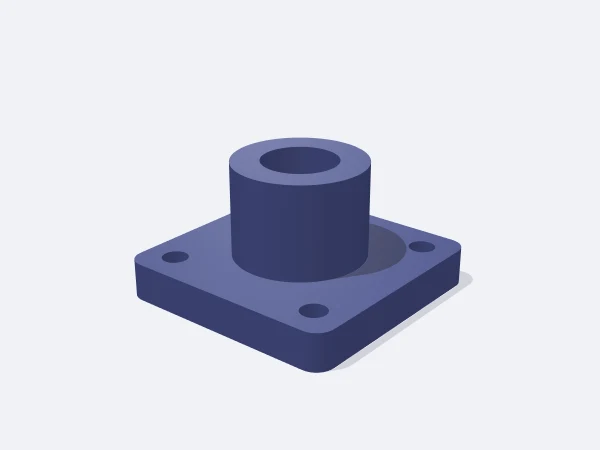
DrawSTL pipe flange template: a round flange plate with a short neck on top, a through bore and bolt holes spaced on a bolt circle

Ready-made variants

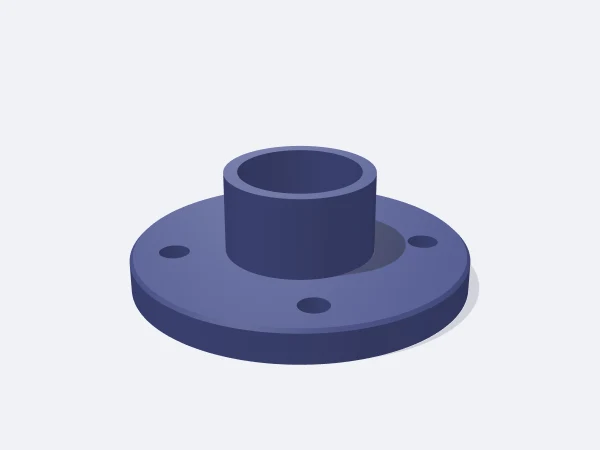
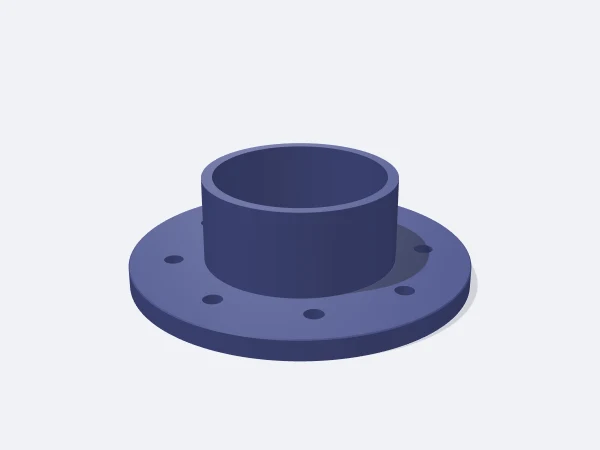
Each variant is the same template with different settings. Follow the link and the editor opens with those values.

Adjustable sizes

These values are edited in the editor's template panel. A number outside the range is clamped to the nearest limit automatically.

SizeRangeDefault
Dimensions
Flange diameter25–200 mm70 mm
Flange thickness2–30 mm6 mm
Body
Neck diameter8–160 mm30 mm
Neck height0–90 mm15 mm
Bore3–150 mm26 mm
Mounting
Bolt count0–124
Bolt hole *1–20 mm5.5 mm
Bolt circle (%) *45–9274

Sizes marked with a star appear in the panel only when the related shape, style or option is active.

What it is used for

  • Attaching ventilation or dust extraction pipe to a wall or enclosure
  • Joining two lengths of pipe with a facing pair of flanges
  • Adapting a shop vacuum hose to a machine port
  • Creating a removable joint in an air or water line
  • Serving as a blanking plate on an open pipe end

Printing tips

Orientation
The flange plate lies flat on the bed with the neck pointing up and the bore vertical. No rotation needed.
Layer height
0.2 mm. Use 0.16 mm when the flange face finish matters.
Infill
60% and up for flanges that carry bolt clamping load. Four walls strengthen the material around the bolt holes.
Supports
None. The neck is a vertical cylinder, the flange's top edge chamfer stays under 45 degrees and the holes are vertical.
Material
PETG is sufficient for air lines and dust extraction. Use ASA for hot air, engine bays and sun; print a separate TPU ring where a sealing face is needed.

Tips

  • Set the neck 0.3 mm under the pipe's inner diameter if it goes inside the pipe, or 0.3 mm over its outer diameter if the pipe goes inside the neck.
  • If the bolt holes would come closer than 0.8 mm to the edge, the neck or each other, the template skips them.
  • For an air seal, add a silicone gasket or a thin TPU ring on the flange face; an FDM surface leaks on its own.

Bolt circle and hole count

The bolt circle is the diameter the hole centres sit on, and two flanges can only be bolted together when that value matches on both sides. The template takes it as a percentage of the flange radius, so the holes keep their proportion when you change the flange diameter.

Hole count is about sealing and load distribution. Four bolts suit small flanges, but as diameter grows the gap between them widens and gasket pressure becomes uneven, so flanges over 100 mm clamp better with six or eight.

  • Bolt circle at 70-80%: a balanced spot between the edge and the neck
  • 4 bolts: enough for flanges under 80 mm
  • 6-8 bolts: over 100 mm, or where gasket pressure must be even
  • 0 bolts: for a glued flange or one you will drill later

The neck: over the pipe or inside it

The neck is the short cylinder rising above the flange and can be used two ways. Make it slightly larger than the pipe's outer diameter and the pipe slides inside the neck. Make it slightly smaller than the pipe's inner diameter and the neck slides inside the pipe.

Set the bore accordingly, since it is the free opening the air or water passes through and must stay smaller than the neck. A neck of 15 to 25 mm grips the pipe well.

Frequently asked questions

How do I make two flanges line up exactly?

Print both with the same flange diameter, bolt count and bolt circle percentage. Because the holes are spaced at equal angles, alignment follows automatically.

Why were no bolt holes cut?

Holes closer than 0.8 mm to the edge, the neck or each other are unsafe and get skipped. Reduce the hole diameter or change the bolt circle.

What do I get with a neck length of zero?

A flat flange plate with a central hole, which suits a blanking plate or a spacer plate between two pipes.

Is it watertight or airtight?

An FDM surface leaks by itself. Add a silicone gasket, an O-ring or a thin TPU washer on the face, and do not use printed plastic for pressurized lines.

Does it match a standard flange size?

The template works in free dimensions and carries no DN or ANSI tables. To bolt onto a standard flange, measure its bolt circle diameter and hole count and enter those values.

Similar templates

Set the sizes to fit your part

Open the template in the editor, enter your values and download a print-ready STL. No account needed.

Open in editor