Home and desk

Make a broom holder that locks when you let go

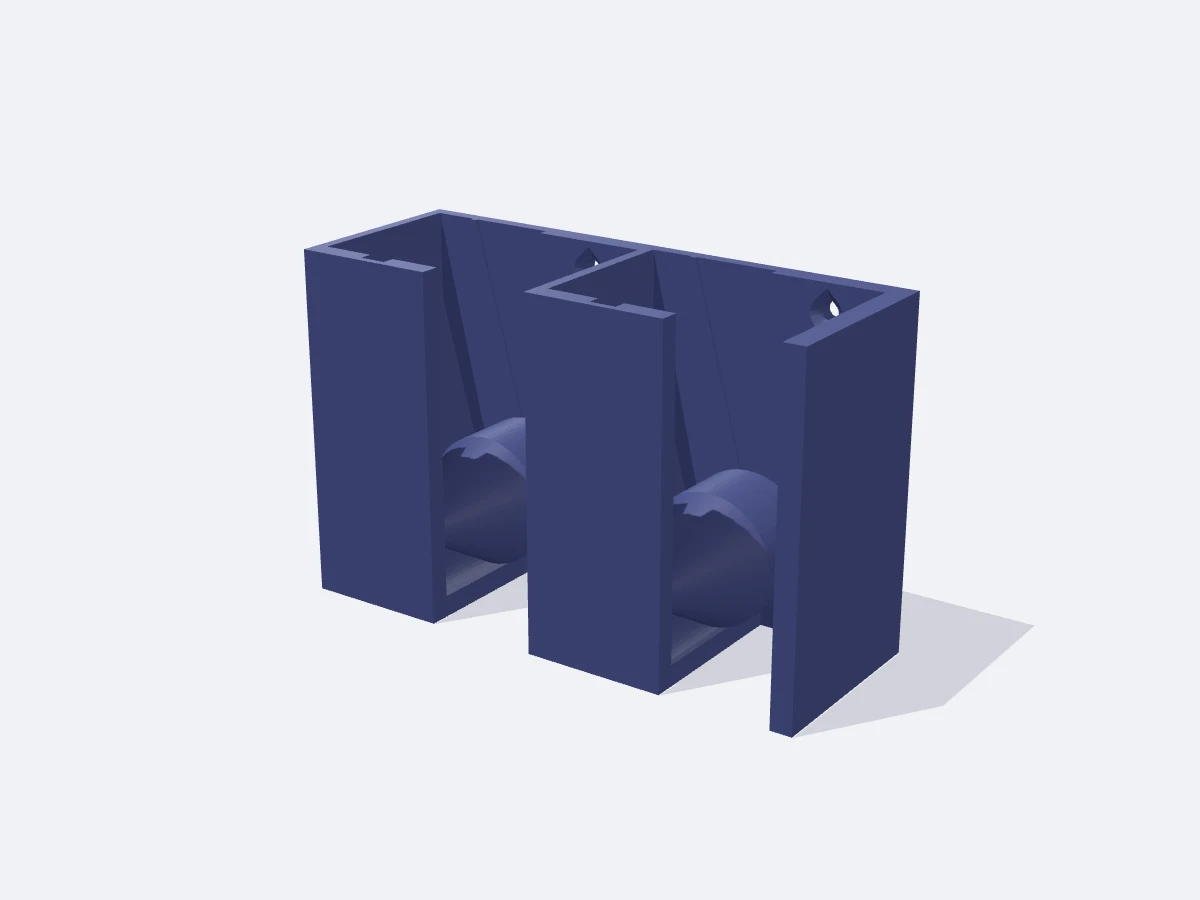
This tool builds a gravity locking wall holder for broom, mop and brush handles to your measurements and exports it as STL. Enter the handle diameter range, number of slots and channel angle in millimetres and degrees; the body and rollers are computed in your browser.

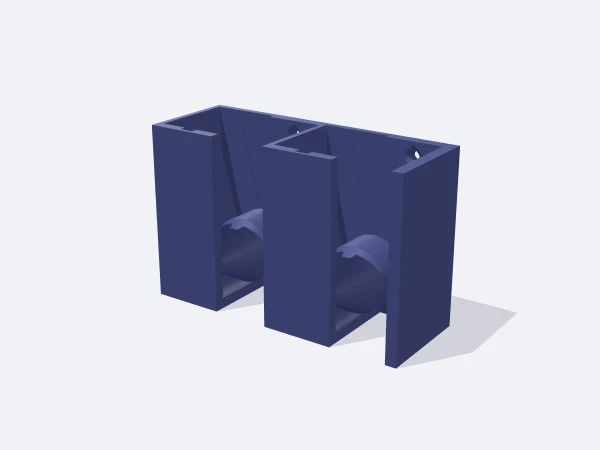
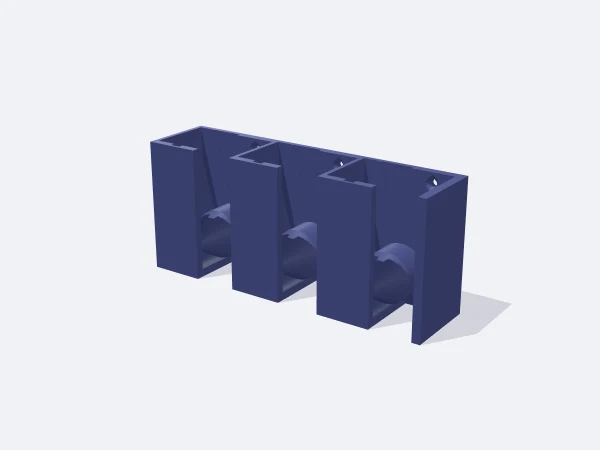
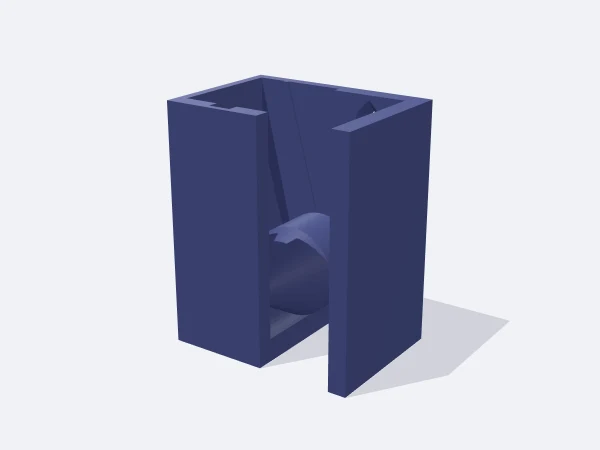
The right cheek of each slot has a sloped channel that narrows downwards, with a loose roller inside. When you push the handle in and slightly up, the roller slides aside and up along its tapered end; when you let go, the roller drops by gravity and presses the handle against the left jaw. Its weight wedges the roller further in, so even a heavy mop stays put. To take it out, push the handle up a little and pull it forward.

Free, no sign-up. Change the sizes in millimetres and download the STL.

Wall mounted two slot broom handle holder with rollers

Ready-made variants

Each variant is the same template with different settings. Follow the link and the editor opens with those values.

Adjustable sizes

These values are edited in the editor's template panel. A number outside the range is clamped to the nearest limit automatically.

SizeRangeDefault
Shape
Number of holders1–52
Dimensions
Thinnest handle18–35 mm20 mm
Thickest handle18–35 mm30 mm
Channel angle10–22 °15 °
Roller diameter24–50 mm36 mm
Mounting
Screw diameter3–6 mm4 mm
CountersinkOn / OffOn

What it is used for

  • Brooms, dustpans and mops organised behind a door
  • Rakes and shovel handles on a balcony or in a shed
  • Brushes and squeegees off the garage floor
  • Long handled tools in one row in a cleaning cupboard

Printing tips

Orientation
Print the body as it is used, with the back plate upright. Print the rollers on their flat back face with the pins pointing up.
Layer height
0.2 mm layers are enough.
Infill
25 percent infill and at least 3 walls keep the screw areas and cheeks solid.
Supports
Not needed. Channel slopes are at most 22° and the screw holes are teardrop shaped.
Material
PLA or PETG works for the body. Printing the rollers in TPU noticeably improves grip and is recommended for polished metal handles.

Tips

  • Drive the screws from the front through the slot; countersunk heads sit flush where the handle rubs.
  • Mount it 1 metre high or more.

How does the lock work and which angle should I pick?

The roller wedges between the handle and the sloped face. If the wedge angle is smaller than twice the friction angle it locks by itself: on a dry wooden or painted metal handle friction is about 0.3, so the limit is around 33°. At the default 15°, friction of 0.13 is enough. The lock still relies on friction; use a TPU roller on slippery handles.

  • General use: 15°
  • Slippery, polished handles: 10-12°
  • Shorter body: 20-22°

How is the handle range set?

The slot is 1 mm wider than the thickest handle. At its lowest position the roller reaches 2 mm past the thinnest handle, so it touches thin handles too. A wider range needs a bigger roller; the tool enlarges it when needed and shows a note.

  • Standard broom and mop: 20-30 mm
  • Thin brush handles: 18-24 mm
  • Garden tools: 28-35 mm

Frequently asked questions

Can the roller fall out?

No. You drop it into the open channel on top; it runs in a back plate recess and a front pin groove. The channel top is vertical, so a handle cannot push the roller out, and it only comes out if you turn the body upside down.

The handle slips. What should I change?

Set the channel angle to 10-12° or print the rollers in TPU. Measure the handle and check it is inside the range.

How much weight does it hold?

The wedge passes the load to the back plate and screws. With two screws and a PLA body it easily holds a 2 kg wet mop.

Similar templates

Set the sizes to fit your part

Open the template in the editor, enter your values and download a print-ready STL. No account needed.

Open in editor