Home and desk

Generate a wall hook at your own dimensions

This tool builds a screw-on wall hook to your measurements and exports it as an STL. Pick a hook style, type the plate size and how far the hook should reach out in millimetres, set the screw holes, and the model is computed in your browser.

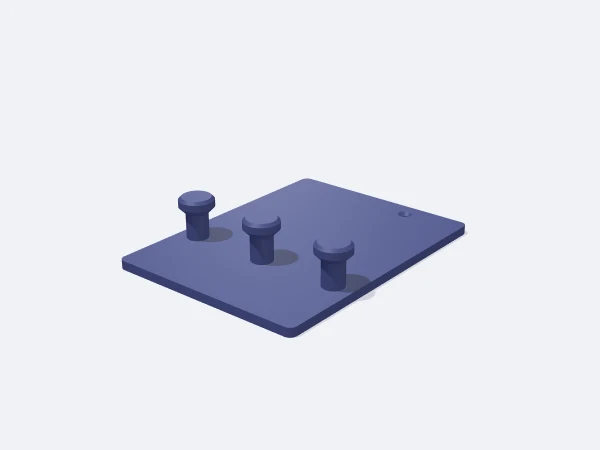
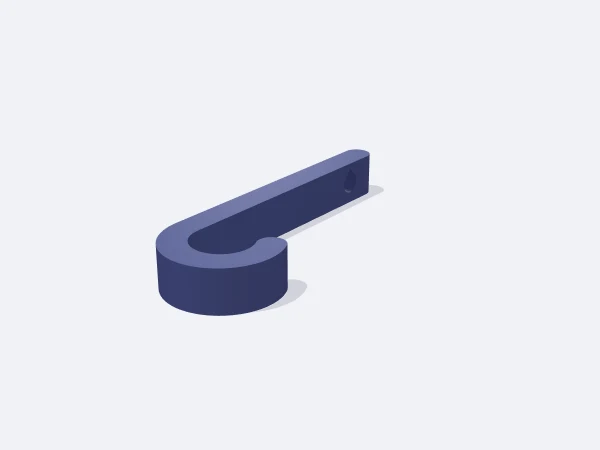
The four styles suit different loads. A J hook curls up to trap a strap or bag handle, a square-tip arm supports straight shafts like a broom, a knob peg fits hats and towels, and the strap hook prints as a single plate-free profile that fits inside a cabinet door.

Free, no sign-up. Change the sizes in millimetres and download the STL.

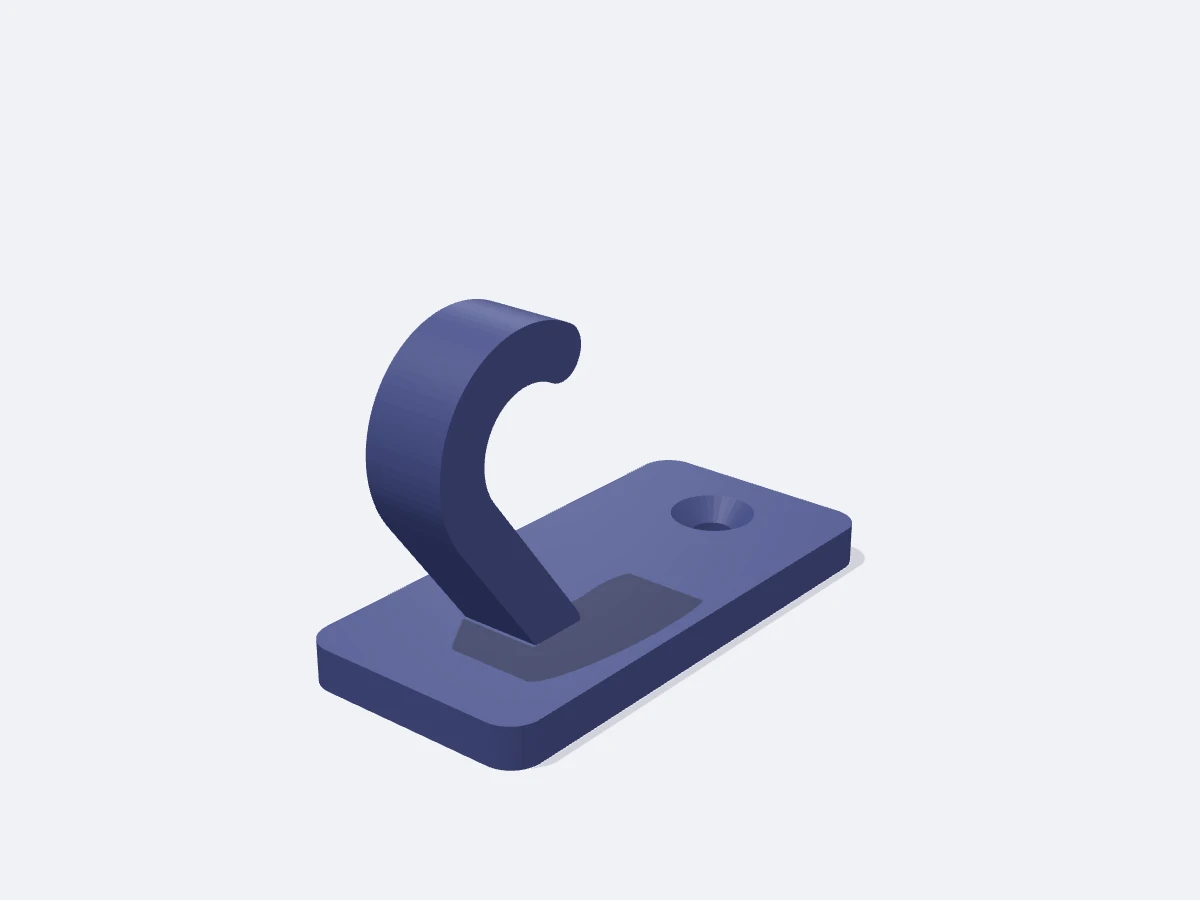
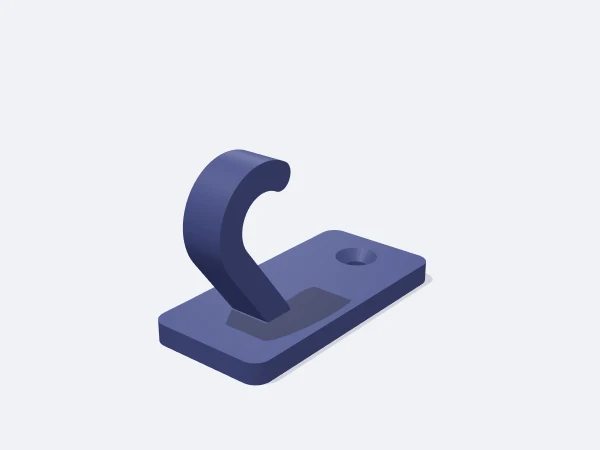
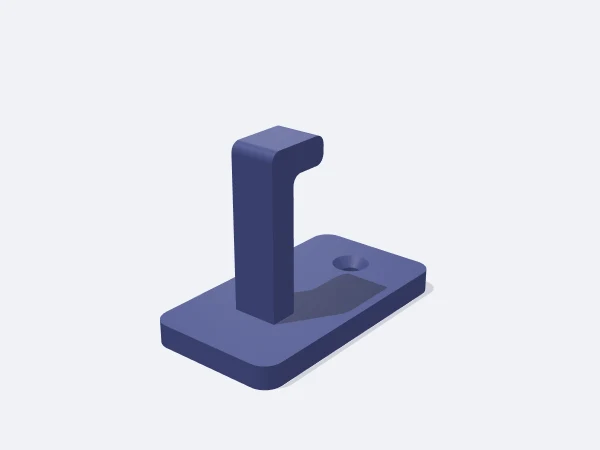
Upright plate with one screw hole and a J hook that comes out of the front and curls up

Ready-made variants

Each variant is the same template with different settings. Follow the link and the editor opens with those values.

Adjustable sizes

These values are edited in the editor's template panel. A number outside the range is clamped to the nearest limit automatically.

SizeRangeDefault
Shape
Hook typeJ hook, Square tip, Knob, Simple hookJ hook
Hook section *Flat, RoundFlat
Hooks *1, 2, 3, 41
Dimensions
Plate width *12–400 mm24 mm
Plate height *25–200 mm50 mm
Plate thickness *2–15 mm4 mm
Corner radius *0–30 mm3 mm
Total height *35–150 mm60 mm
Hook
Hook position (%) *5–9530
Reach *10–120 mm30 mm
Drop *0–70 mm10 mm
Hook radius *3–30 mm8 mm
Hook thickness *3–20 mm5 mm
Hook width *4–40 mm8 mm
Tip lift *0–26 mm4 mm
Tip lip *0–40 mm9 mm
Knob diameter *6–40 mm12 mm
Cap flare (%) *0–6060
Hook spacing *15–150 mm40 mm
Mounting
HolesNone, 1, 2, 31
Screw hole *2–8 mm4 mm
First hole (from top) *4–90 mm8 mm
Hole spacing *6–90 mm14 mm
Countersink *On / OffOn

Sizes marked with a star appear in the panel only when the related shape, style or option is active.

What it is used for

  • Coat, towel and robe hooks in a hallway or bathroom
  • Measuring cups and ladles inside a kitchen cabinet
  • Hand tools and cable hangers on a workshop board
  • Space-saving hooks in campervan and boat lockers
  • Helmets, tote bags and dog leads by the door

Printing tips

Orientation
Plate styles print back-down with the hook rising from the plate. The strap hook prints on its side with the profile on the bed, and its teardrop screw holes need no support.
Layer height
0.2 mm with a 0.4 mm nozzle is fine. Use 0.16 mm for a smoother curve on the hook tip.
Infill
40% infill and 4 perimeters. The critical load sits where the hook meets the plate, and perimeter count matters more there than infill.
Supports
Not needed at most settings. The J tip curl and the underside of a square lip are short overhangs; enable supports if the lip goes past 20 mm.
Material
PETG is the best all-round indoor choice and fails tougher than PLA. Use ASA outdoors or in direct sun, and carbon-filled PETG or PA for heavy loads.

Tips

  • Keep the plate at 4 mm or thicker, or it bows as the screw tightens and the hook pulls away from the wall.
  • Leave countersinks on so the screw head sits flush and the hook lies flat against the wall.

Matching hook style to load

The J hook lifts a strap or cord upward, so the load locks itself in place; keeping the tip rise above 4 mm stops anything sliding off. The square-tip arm is a straight projecting bar with a lip at the end, which suits broom handles, frames and other flat-edged items.

  • Heavy coats and bags: J hook, hook thickness above 6 mm
  • Straight-shafted tools: square-tip arm, 8-12 mm lip
Placing screw holes for your wall

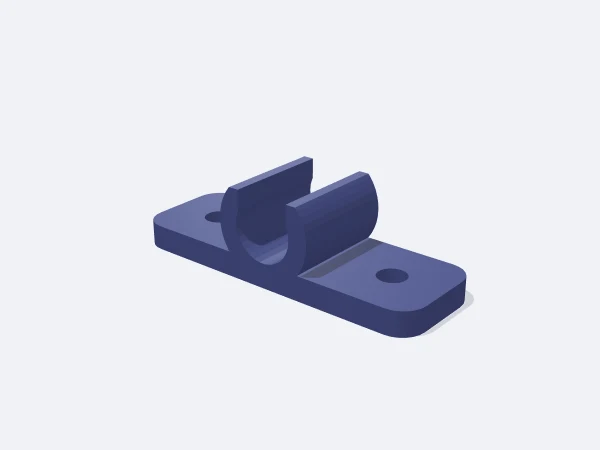
You can choose one, two or three screws. One hole is enough for light loads but lets the hook rotate around the screw; a second hole removes that completely. The distance of the first hole from the top and the gap between holes are separate inputs, so you can land on existing anchor holes.

  • Make the hole 0.4 mm larger than the screw shank
  • Keep the first hole at least 8 mm below the plate top edge

Frequently asked questions

How much weight will a printed hook carry?

It depends on orientation, material and size. A PETG J hook with a 4 mm plate and 5 mm hook thickness, printed back-down, carries roughly 5-8 kg in practice. Increase hook thickness and perimeter count for more.

Why does the plate print back-down instead of flat on its side?

The load tries to split layers at the hook root. Printed back-down, the layers meet that load in shear, which is far stronger than loading them in the direction that pulls them apart.

Can I mount it with tape instead of screws?

Set the screw count to zero and the plate stays flat, ready for double-sided tape. Increasing plate width and height gives the tape noticeably more grip.

Similar templates

Set the sizes to fit your part

Open the template in the editor, enter your values and download a print-ready STL. No account needed.

Open in editor