Home and desk

Generate a drawer pull from its screw centres

This tool builds a drawer or cabinet pull that matches furniture standards and exports it as an STL. Enter the hole-to-hole screw spacing in millimetres, set the bar thickness and height, and the model is computed in your browser ready to download.

Furniture pulls come in fixed centres such as 96, 128 and 160 mm, and finding a single matching replacement from a discontinued range is usually impossible. Entering the exact spacing here means no redrilling, and adjusting the bar thickness gets the replacement visually close to the rest of the set.

Free, no sign-up. Change the sizes in millimetres and download the STL.

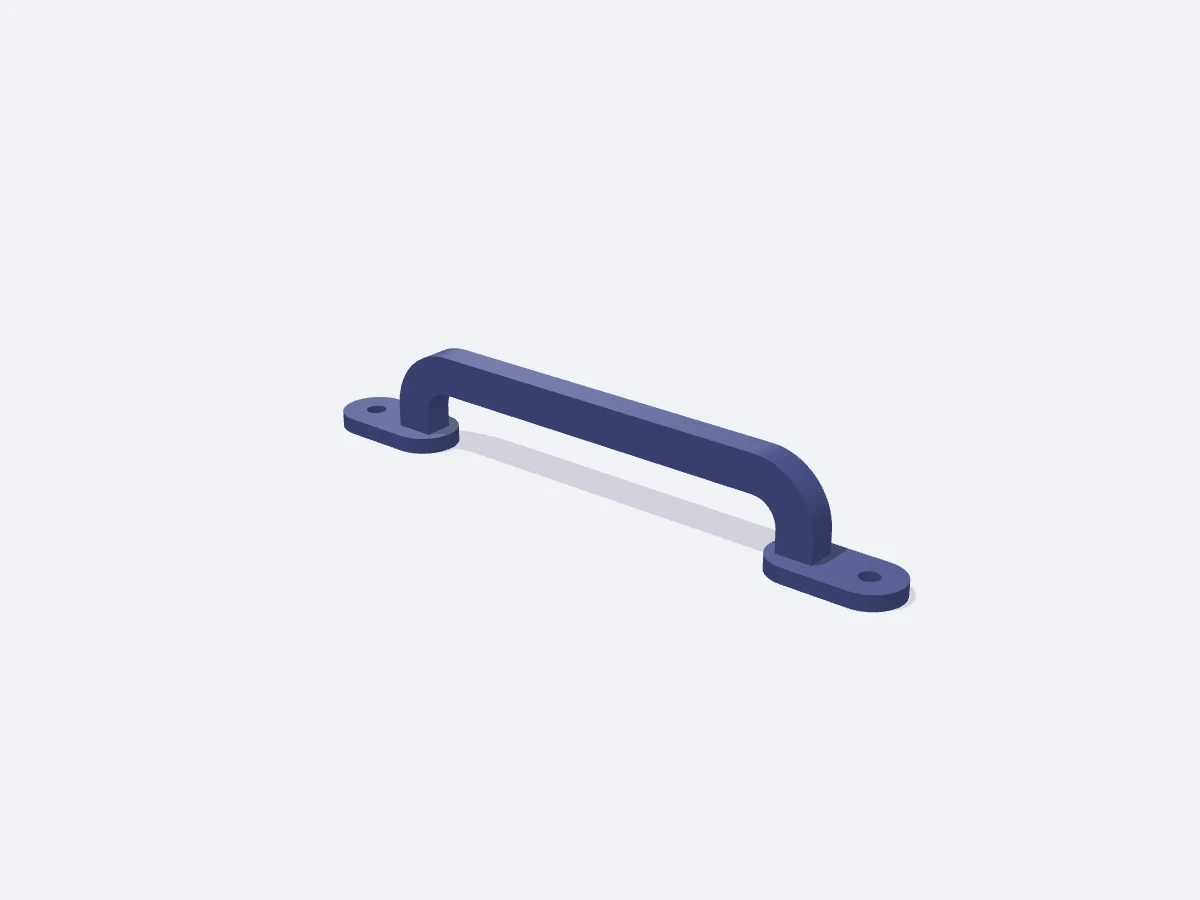
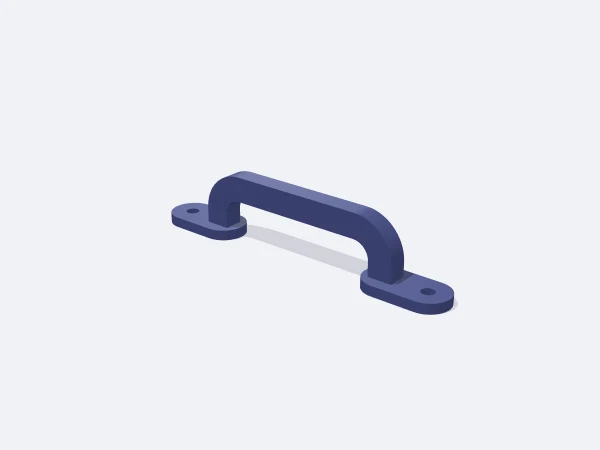
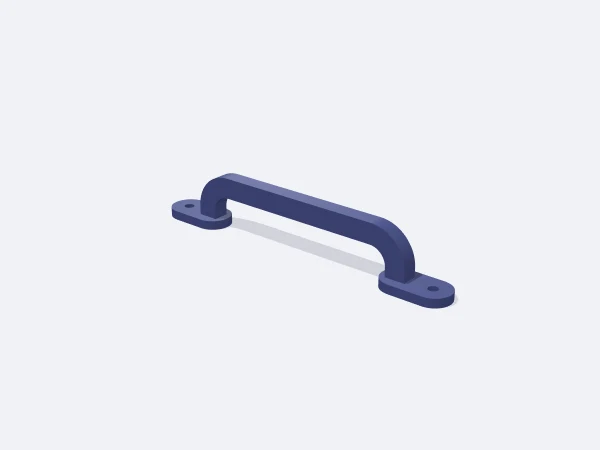
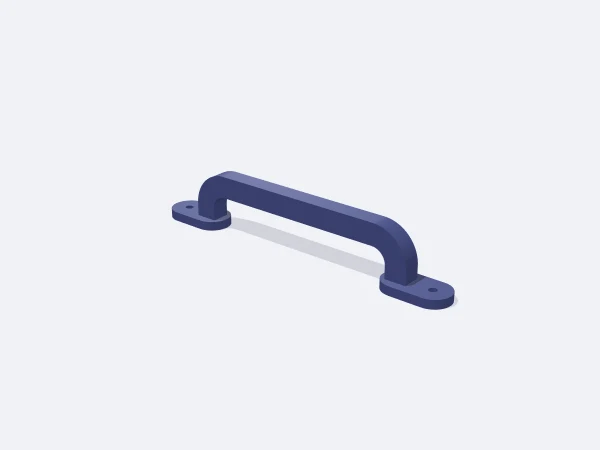
Arched pull handle with rounded corners and screw feet on both sides

Ready-made variants

Each variant is the same template with different settings. Follow the link and the editor opens with those values.

Adjustable sizes

These values are edited in the editor's template panel. A number outside the range is clamped to the nearest limit automatically.

SizeRangeDefault
Body
Screw spacing (c/c)40–224 mm130 mm
Height14–80 mm18.5 mm
Bar thickness6–24 mm8.5 mm
Bar width6–32 mm6.5 mm
Corner rounding0–35 mm10 mm
Mounting
Foot extension5–32 mm15 mm
Foot width8–40 mm15 mm
Foot thickness2–12 mm3.5 mm
Screw hole Ø0–8 mm4.4 mm

What it is used for

  • Replacement for a snapped kitchen drawer pull
  • Pulls for MDF cabinet and dresser doors
  • Tough handles for workshop and tool drawers
  • Custom-length pulls on furniture you built yourself
  • Arched grab handles for box lids and chests

Printing tips

Orientation
Print feet down with the bar above. The underside of the bar bridges between the feet, and the panel reports the bridge length in millimetres.
Layer height
Use 0.2 mm. The bridge closes more cleanly at that height.
Infill
60% infill and 4 perimeters. A pull takes constant pulling load, so keep both high.
Supports
None needed; just leave bridging enabled in the slicer. Bridges over 100 mm may sag slightly at mid-span.
Material
PETG is recommended: it fails tougher than PLA and shrugs off kitchen humidity. Use carbon-filled PETG or PA for heavy loads. ABS and ASA also work, but watch layer adhesion.

Tips

  • Leave the screw hole at 4.4 mm; furniture pull screws are M4 and pass easily at that size.
  • Do not take bar thickness below 8 mm, or it feels like a sharp edge when pulled.
  • Pad thickness sets how far the bar stands off the door; 3.5 mm leaves enough room for fingers.

Why pulls are measured hole to hole

In the furniture trade a pull size is the distance between the centres of its two screw holes, not its overall length. That is why a 128 mm pull can measure 140-150 mm end to end. Measure the centre distance of your existing holes and enter it; the overall length follows from the pad extension.

  • Small drawers: 96 mm with an 8-9 mm bar
  • Wide drawers and cabinet doors: 128 mm
  • Large kitchen drawers: 160 mm with a 10-12 mm bar
  • Non-standard holes: measure and enter it, 40-224 mm

Bridging and bar thickness

The feet sit on the plate and the underside of the bar spans the gap between them. That span prints as a bridge, and the panel shows its length. Modern slicers bridge up to 100 mm cleanly; longer spans sag a little on the first bridge layer, but nobody sees the underside of a pull.

  • Bridge under 100 mm: no trouble
  • Bridge over 100 mm: raise bridge flow to 110%
  • Bar thickness 8-10 mm: right for most drawers
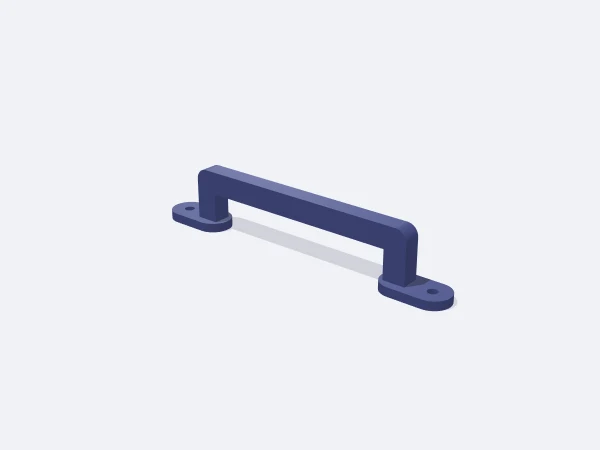
  • Corner radius 0: square, 12-14 mm: arched

Frequently asked questions

What are the standard furniture sizes?

The most common centres are 96, 128 and 160 mm. Small doors often use 64 mm, and large drawers use 192 or 224 mm. This template covers every value from 40 to 224 mm.

Will a printed handle break easily?

In PETG at 60% infill with 4 perimeters it handles normal drawer use without trouble. Failure starts at the thinnest part of the bar, so increasing bar thickness raises strength noticeably.

Why do the screw holes move outward?

If a hole falls under the pad extension, you cannot get a screwdriver to it. The panel detects that, pushes the holes outside the pad, and reports the new spacing in millimetres.

Similar templates

Set the sizes to fit your part

Open the template in the editor, enter your values and download a print-ready STL. No account needed.

Open in editor